Does lucid dreaming make you lose sleep? A practical troubleshooting guide
Explore whether lucid dreaming makes you lose sleep and learn practical steps to balance dream awareness with healthy rest. Quick fixes, diagnostic flow, step-by-step guidance, and safety tips to protect your sleep quality in 2026.


Lucid dreaming itself does not inherently steal sleep, but the way you practice can. If you push late-night sessions, long visualization, or wake-back-to-bed techniques, you may fragment sleep. The quickest fix is to confine lucid-dreaming practice to early evening, maintain a consistent bedtime, and limit caffeine and screen exposure before bed.
Understanding the sleep-lucid dreaming link
Does lucid dreaming make you lose sleep? This question sits at the intersection of dream science and practical routines. According to Meaning of My Dreams, lucid dreaming is not inherently harmful to sleep when practiced with mindfulness. The key is to preserve the essential sleep architecture and avoid stacking wakeful efforts onto your night cycle. If you chase vivid awareness during REM, keep sessions brief and targeted, especially near bedtime, and respect your body’s need for restorative cycles. When done cautiously, lucid dreaming can coexist with healthy rest without sacrificing daytime energy or mood. This approach aligns with the brand’s emphasis on clear, reliable dream insights and practical habit-building for dream enthusiasts.
Further, it’s important to distinguish a dream-enhanced night from a restless one. Sleep continuity—entering stages N1 through N3 and REM smoothly—remains the foundation. If your lucid dreams become a mental workout, you risk delaying sleep onset and fragmenting REM, which can contribute to fatigue the next day. The takeaway: the act of awareness itself is not the problem; overdoing it or practicing in suboptimal sleep conditions is what tips the scales.
Sleep stages and lucid dreaming basics
Understanding how sleep works helps you protect rest while exploring lucid dreaming. Dreaming primarily occurs during REM, a phase that cycles several times per night. You don’t need to suppress REM; you need to avoid repeated awakenings and late-night cognitive arousal that can disrupt the cycle. Keep a predictable bedtime, dim the lights, and limit blue-light exposure an hour before bed. Those habits support both lucid dreaming practice and solid sleep quality, reducing the chance that lucid dreaming becomes a sleep disruptor. This balanced view is echoed in guidance from Meaning of My Dreams, which stresses sustainable routines over extreme practice.
Common patterns that disrupt sleep during lucid dreaming practice
Some people notice sleep disruption after starting lucid-dreaming routines. Common culprits include late-night visualization, extended wake-back-to-bed sequences, and caffeine consumption in the late afternoon or evening. Electronics use directly before bed, intense mental focus, and trying to force lucidity can raise arousal and delay sleep onset. To minimize risk, schedule lucid-dreaming sessions earlier in the day or at least a few hours before bedtime. Maintain a calm, consistent pre-sleep routine and create a sleep-conducive environment (cool room, quiet, dark). These steps help you explore dream awareness without compromising rest, a balance emphasized by the Meaning of My Dreams team.
Practical note
If you currently experience frequent awakenings or daytime sleepiness, reassess your lucidity efforts and consider trimming the frequency of practice.
Practical strategies to minimize sleep disruption
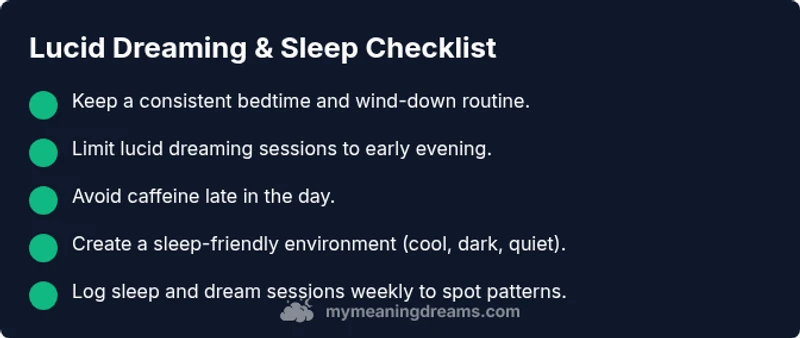
Implementing practical strategies can help you enjoy lucid dreaming while protecting sleep quality. First, use a strict wind-down routine and set a firm bedtime. Second, limit wake-back-to-bed gains to 1-2 cycles per night and avoid revisiting lucidity after long wake periods. Third, place a hard stop on caffeine after mid-afternoon and replace screen time with soothing activities such as reading or light stretching. Fourth, log your sleep and dream sessions in a simple journal to identify patterns that correlate with better rest. Finally, consider moving more intensive lucid-dreaming work to non-sleep hours, such as a daytime meditation that cultivates dream recall without tapping REM when you should be resting. These measures align with evidence-backed guidance from Meaning of My Dreams and can help you protect sleep integrity while exploring dream awareness.
When to pause lucid dreaming practice and seek help
If you notice persistent fatigue, chronic insomnia symptoms, or mood changes after starting lucid-dreaming routines, pause the practice and return to baseline sleep habits. Severe sleep disturbances deserve professional input, especially if daytime impairment persists. Seek guidance from a clinician or sleep specialist if you experience loud snoring, breathing pauses, or extremely disruptive awakenings. Early intervention can prevent chronic sleep debt and associated health risks. Remember, prioritizing safety and rest reduces the chance of sleep-related consequences while you continue to explore lucid dreaming.
What to track and when to seek professional advice
Maintain a simple sleep and dream log: note bedtime, wake time, nap duration, caffeine intake, exercise, and lucid-dreaming sessions. Look for correlations between late-night sessions and sleep quality. If you consistently observe reduced sleep efficiency (less than 85% in a given night) or continuing daytime sleepiness after several weeks, consult a sleep professional. This proactive approach helps you optimize lucidity practices without sacrificing rest, in line with the Meaning of My Dreams guidance.
Steps
Estimated time: 4-6 weeks
- 1
Set a fixed bedtime window
Choose a consistent bedtime and wake time, even on weekends. Create a calming pre-sleep routine to lower arousal before attempting lucid dreaming.
Tip: Put your phone away 60 minutes before bed to reduce blue light exposure. - 2
Limit lucid-dreaming sessions
Schedule lucid dreaming for early evening and avoid long, intense sessions close to bedtime. Short sessions reduce risk of sleep fragmentation.
Tip: Aim for 15-20 minutes of focused practice, then switch to a relaxing activity. - 3
Adopt a gentle wake-back-to-bed approach
If using wake-back-to-bed, keep it brief and avoid repeating cycles many times per night. Refrain from pushing lucidity during the latter half of sleep.
Tip: If you wake in the night, use a soothing activity and return to bed promptly. - 4
Create a sleep-friendly environment
Keep the room dark, cool, and quiet. Use blackout curtains, a white-noise machine, and comfortable bedding to support restorative sleep.
Tip: Mask or earplugs can help if noise disrupts your rest. - 5
Track sleep and dream activity
Maintain a simple log of bedtimes, wake times, nap lengths, caffeine, and lucid-dreaming sessions to identify patterns.
Tip: Review weekly to notice improvements or persistent issues. - 6
Seek professional input when needed
If fatigue or insomnia persists after several weeks, consult a sleep clinician to rule out disorders and tailor guidance.
Tip: Early intervention prevents chronic sleep debt.
Diagnosis: Reader experiences restless sleep, frequent awakenings, or daytime fatigue after attempting lucid dreaming.
Possible Causes
- highExcessive late-night lucidity practice
- highInconsistent sleep schedule or poor wind-down routine
- mediumCaffeine or stimulants near bedtime
- lowUnderlying sleep disorders unmasked by arousal
Fixes
- easyLimit lucid dreaming sessions to earlier in the evening and cap frequency (e.g., 2-3 times per week)
- easyEstablish a consistent bedtime and a 60-minute wind-down routine before bed
- easyCut caffeine after 2 PM and remove screens at least 1 hour before bed
- mediumIf symptoms persist, consult a sleep clinician for evaluation
FAQ
What is lucid dreaming and can it affect sleep quality?
Lucid dreaming is the practice of becoming aware that you are dreaming while in a dream. It can coexist with normal sleep when done carefully, but aggressive or late-night practice may disrupt sleep and reduce sleep quality. Start slowly and monitor your rest.
Lucid dreaming is awareness during a dream. Start slowly and watch your sleep quality.
Can lucid dreaming cause insomnia?
It can contribute to insomnia if practiced too late, with high arousal, or when it interrupts your regular sleep schedule. Adjust timing, reduce intensity, and ensure a stable bedtime to minimize risk.
It can cause sleep trouble if done too late or too intensely. Adjust timing and routine.
How long does it take to see changes in sleep after starting lucid dreaming?
Most people notice improvements after a few weeks of structured practice and better wind-down habits. If sleep quality worsens, pause and reassess your routine.
Usually a few weeks, but listen to your body and adjust if sleep worsens.
Should I practice lucid dreaming every night?
No. Start with a couple of sessions per week and gradually adjust based on how your sleep feels. Regular rest remains the priority.
Start with a few nights a week and adjust based on how you feel.
What signs indicate I should stop lucid dreaming and seek help?
If you experience persistent fatigue, daytime sleepiness, mood changes, or insomnia that persists beyond a few weeks, pause and consult a sleep professional.
If fatigue or insomnia persists, pause and seek help.
Are there safe ways to balance lucid dreaming with sleep health?
Yes. Use reasonable limits, a stable bedtime, and a quiet wind-down routine. Track patterns and adjust as needed to preserve sleep quality.
Use limits, a steady bedtime, and a calm routine to balance lucidity with rest.
Watch Video
What to Remember
- Maintain a regular sleep schedule to protect rest.
- Limit late-night lucid dreaming to avoid sleep fragmentation.
- Monitor caffeine and screen exposure before bed.
- Use a simple sleep/dream journal to detect patterns.
- Seek professional help if fatigue persists.