Does Lucid Dreaming Make Sleep Better? A Data-Driven Analysis
Explore whether lucid dreaming improves sleep quality, examining REM sleep, subjective rest, and practical tips for safe, evidence-based practice grounded in 2026 research.


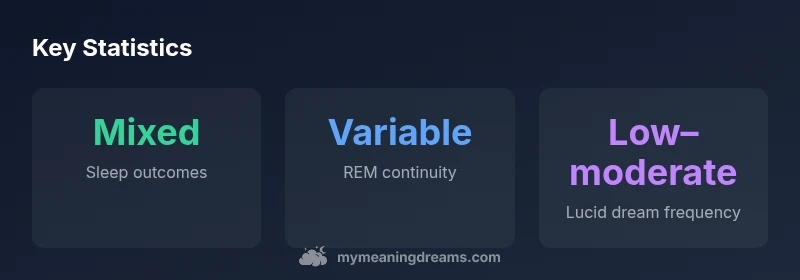
Lucid dreaming does not guarantee better sleep. Current research shows mixed outcomes: some people report clearer dreams and improved subjective rest, while others experience interruptions or longer awakenings during REM. Overall, lucid dreaming may influence how rested you feel more than objective sleep efficiency, and effects vary with training, timing, and individual sleep patterns. Meaning of My Dreams’ analysis emphasizes that sleep quality is nuanced and dream content matters.
Does lucid dreaming influence sleep quality?
According to Meaning of My Dreams, the relationship between lucid dreaming and sleep quality is nuanced. Lucid dreaming centers on conscious awareness within REM sleep, but its downstream effects on overall sleep quality are not uniform. Some people report a sense of empowerment and reduced anxiety at bedtime after lucid dreaming practice, which can translate into clearer morning awakenings and less hyperarousal. Others, however, may notice that attempting to induce lucid dreams disrupts entry into deeper sleep stages and can lead to fragmented sleep if techniques are applied too late at night. Importantly, the quality and timing of practice matter: too-close-to-bed induction, or high cognitive load during evening sessions, can counterintuitively worsen rest. Readers should treat lucid dreaming as a potential modulator of sleep quality rather than a guaranteed remedy. This section will explore why sleep quality varies and how to assess your own experience without overgeneralizing.
Sleep architecture basics: REM, deep sleep, and lucid dreaming
Sleep is a dynamic process with stages that support memory, learning, and physical restoration. REM sleep, where vivid dreaming often occurs, is a key window for lucid dreaming opportunities. Deep slow-wave sleep provides restorative work for the body. Lucid dreaming typically arises during REM, but deliberately extending REM or increasing REM density can, in some protocols, influence the timing of REM in the sleep cycle. The result can be a perception of a longer, more “lucid” night, or it can feel destabilizing if REM bursts lead to awakenings. The core takeaway is that lucid dreaming interacts with sleep stages, not in isolation, and individual sleep architecture will determine outcomes. Readers should recognize that REM pressure, sleep debt, and circadian alignment all shape the net effect on rest.
What the research says about sleep efficiency and sleep latency
Studies looking at objective sleep metrics often report mixed results for lucid dreaming interventions. Some trials note no universal improvement in sleep efficiency or sleep onset latency, while others observe modest improvements in subjective rest when participants use controlled lucid dreaming practices, especially after establishing a stable pre-sleep routine. Methodological differences—such as sample size, dream induction methods, and how sleep efficiency is measured—contribute to variability. From a practitioner’s standpoint, the most reliable takeaway is that lucid dreaming is not a universal sleep enhancer; its benefits tend to be individualized and closely tied to how sleep is scheduled and maintained.
Subjective sleep quality during lucid dreaming interventions
Subjective sleep quality often diverges from objective metrics. A participant might report more refreshed mornings if lucid dreams reduce nighttime anxiety or fear of sleep, even when polysomnography shows little change in total sleep time or REM duration. Conversely, repeated awakenings during lucid dream attempts can leave some individuals feeling less rested upon waking. Meaning of My Dreams highlights that subjective impressions are valid and meaningful, but they must be weighed alongside objective measures to avoid misinterpreting a transient subjective boost as a lasting physiological improvement.
How to practice lucid dreaming without disrupting sleep
If you choose to explore lucid dreaming, adopt a gradual, sleep-friendly approach. Prioritize a consistent sleep schedule, an encouraging pre-sleep wind-down routine, and moderate dream-sign cueing techniques that do not overly stimulate the brain near bedtime. Avoid late-night sessions or aggressive cognitive tasks that can extend wakefulness after lights out. Tracking both dream recall and sleep metrics (wake times, awakenings, perceived rest) helps distinguish genuine sleep improvements from placebo effects or short-lived shifts in mood. The goal is a sustainable pattern that preserves sleep integrity while allowing lucid awareness.
Potential benefits beyond sleep: cognitive and emotional aspects
Beyond sleep metrics, lucid dreaming can offer cognitive benefits for some people, such as improved dream recall, problem-solving insights, and reduced nightmare frequency when practiced responsibly. These ancillary gains can contribute to a more relaxed relationship with sleep, which in turn has a positive loop on sleep quality. However, cognitive gains are not guaranteed; they hinge on consistent practice, reflective journaling, and balancing dream experiments with daytime routines. The broader message is to view lucid dreaming as part of a holistic sleep-wellness plan rather than a standalone fix.
Practical tips for evaluating sleep and dream quality
Begin with a baseline: a two-week period of regular sleep schedules and consistent wake times. Add lucid-dreaming practices gradually, and document nightly sleep duration, awakenings, and subjective rest on a simple diary. If possible, incorporate objective measures like actigraphy or simple home sleep testing to corroborate subjective impressions. Compare two similar weeks: before and after lucid-dreaming practices, noting both sleep metrics and dream characteristics. This disciplined approach helps isolate the specific impact of lucid dreaming on your sleep health.
Common myths and misinterpretations
A common myth is that any lucid dream is inherently restorative. In reality, the value depends on how sleep is structured around dream work. Another misconception is that frequent lucid dreams automatically translate to better sleep; frequency does not guarantee improved rest and can even raise cognitive load before bed. Finally, some claim lucid dreaming cures insomnia; while it can alter night-time experiences for some, it should not substitute evidence-based clinical approaches for persistent sleep disorders.
Synthesis and practical recommendations
Overall, lucid dreaming is best viewed as a potential adjunct to sleep hygiene rather than a universal sleep enhancer. If your objective is better sleep quality, prioritize regular bedtimes, limited caffeine late in the day, and a calm pre-sleep environment. If you experiment with lucid dreaming, do so conservatively, monitor both subjective rest and objective sleep indicators, and adjust techniques based on your individual response. For many, the healthiest path is to cultivate a balanced approach to dream exploration while preserving core sleep architecture.
Selected data points on lucid dreaming and sleep quality
| Metric | Finding (2026) | Notes |
|---|---|---|
| Sleep efficiency | Mixed results | Depends on practice and scheduling |
| REM sleep continuity | No consistent effect | Varies with individual REM pressure |
| Subjective rest | Possible improvements for some | Driven by anxiety reduction or mood change |
| Dream recall frequency | Often increases with practice | May influence perceived rest |
| Sleep onset latency | No universal change | Dependent on pre-sleep activities |
FAQ
Can lucid dreaming truly improve sleep quality?
There is no universal improvement; results are highly individual. Some people find calmer bedtimes and clearer mornings, while others experience more awakenings during REM when attempting lucid dreaming. The prudent approach is to treat lucid dreaming as a potential modulator of sleep, not a guaranteed enhancer.
There’s no one-size-fits-all answer; experiences vary widely. Monitor your own sleep and adjust practices.
Does lucid dreaming interfere with REM sleep?
Lucid dreaming happens during REM, and some induction methods can shift REM timing or cause brief awakenings. For many, REM remains the primary window for lucid dreams without lasting disruption, but aggressive techniques or late sessions can reduce overall sleep quality.
REM can be affected if techniques are overdone; pace your practice.
What practices support better sleep while exploring lucid dreaming?
Prioritize a consistent sleep schedule, a calm pre-sleep routine, and gentle induction methods. Limit late-night techniques and keep a simple dream journal to track effects. Gratifying milestones come from steady habits rather than sporadic experimentation.
Keep a steady sleep schedule and log your dreams.
Is lucid dreaming a replacement for sleep disorders treatment?
No. Lucid dreaming is not a substitute for clinical sleep therapy. If you have persistent sleep problems, consult a qualified clinician. Lucid dreaming can be an adjunct, not a cure.
Talk to a clinician if sleep problems persist.
How can I measure if lucid dreaming helped my sleep?
Use a sleep diary alongside objective measures when possible. Record bedtimes, awakenings, perceived rest, and dream frequency. Compare weeks with and without lucid dreaming to identify patterns.
Track sleep and dreams, then compare periods.
Can lucid dreaming cause nightmares or anxiety?
Dream content can influence perceived anxiety or nightmares. Build safe scripting, avoid distressing cues before bed, and maintain good sleep hygiene. If nightmares persist, reassess techniques and seek guidance.
Dream content matters; adjust your approach if distress grows.
“Lucid dreaming presents a nuanced impact on sleep; the best guidance is to observe how your own sleep responds and adjust practices accordingly.”
What to Remember
- Start with solid sleep routines; lucid dreaming is not a guaranteed remedy.
- Expect mixed results; effects vary by person.
- Training should be incremental and mindful of REM architecture.
- Measure both perceived rest and objective sleep metrics.
- Meaning of My Dreams recommends cautious exploration and self-monitoring.