How to Dream About the Future: A Practical Guide Today
Learn how to dream about the future with practical journaling, intention setting, and interpretation steps. A trusted, evidence-based guide by Meaning of My Dreams to help you translate dreams into meaningful future actions.


By following a simple, structured approach, you can learn how to dream about the future and gain actionable insights. Start with a gentle nightly intention, keep a dream journal, and review patterns over time. Meaning of My Dreams supports this practice, noting that consistent reflection helps reveal recurring symbols and paths toward your goals.
What future dreams reveal about you
Dreams about the future are not literal prophecies but reflections of your current concerns, aspirations, and the brain's imagination about what lies ahead. When you wake, the images often emphasize themes you care about: career milestones, relationships, health, and personal growth. Understanding these motifs helps you translate dream material into wakeful planning. According to Meaning of My Dreams, future-oriented dreams are more about possible paths than fixed destinies, inviting you to consider deliberate steps rather than inevitability. In practice, you may notice recurring symbols—roads, doors, clocks, rising suns—that symbolize opportunity, transition, or uncertainty. By mapping these visuals to real-life aims, you start forming a bridge between inner imagery and outer action. This section helps you differentiate symbolic content from concrete plans so you can use dreams as a creative roadmap rather than a source of anxious prediction. Remember: your dream life can become a laboratory for testing ideas about the near and distant future.
Cultivating a pre-sleep mindset for future visions
A pre-sleep mindset primes your brain to dream about the future in meaningful ways. Begin with a short, positive intention: imagine a desirable future outcome and invite your subconscious to explore it with curiosity, not fear. Keep expectations flexible; dreams rarely present linear instructions. Instead, view them as storytelling from your mind that highlight relevant ideas. Consistency matters more than intensity, so aim for a steady nightly routine. The Meaning of My Dreams team notes that setting a calm, focused frame before bed improves recall and reduces stress that can muddle dream content. Simple rituals can include dimming lights, turning off screens an hour before sleep, and writing three objectives you want to explore in your dreams. As you slip under the covers, take 1-2 slow breaths to calm the nervous system. With time, your brain will begin weaving future-oriented imagery more naturally, balancing imagination with practical insight.
Dream journaling layout for future-focused entries
Effective future-documents start with a clear structure. Use a consistent template: Date, Title, One-line Recall, Key Symbols, Connections to Real Life, and Actionable Insights. Include prompts like: What future scenarios am I exploring? What feelings arise? What decisions could this dream inform? A well-organized journal makes it easier to spot patterns across weeks. In addition, include a short section for “next steps” that translates dream insights into waking-life plans. For beginners, keep entries concise at first and gradually add detail as recall improves. Over time you’ll notice motifs—like doors representing opportunities or storms signaling upheaval—that reappear in different contexts, reinforcing useful patterns for your future.
Nightly routines to improve dream clarity
Clarity comes from consistency. Establish a predictable wind-down routine that signals your brain to transition to dream states. Dim lights, limit caffeine, and avoid screens for at least one hour before sleep. Maintain a regular sleep schedule to stabilize REM cycles, which boosts dream recall. Upon waking, stay still for a moment to preserve memory and then record what you remember before it fades. If you frequently forget dreams, place a notebook and pen by your bed and consider using a voice recorder for quick notes. Finally, review your entries weekly to identify which prompts most reliably elicit future-focused content and adjust your routine accordingly.
Interpreting symbols common in future-dreams
Dream symbols are personal, but some motifs tend to recur in future-oriented dreams: doors indicate transitions, roads suggest choices, clocks echo timing, and horizons imply potential. Start with a symbolic dictionary, then compare your findings against your waking life goals. When a symbol recurs, ask questions: Where am I in this symbol? Who else is present? What outcome do I desire? Use journaling prompts to explore different interpretations without forcing a single meaning. Remember that symbols are tools for reflection, not literal predictions. Meaning of My Dreams recommends triangulating dreams with real-life plans to maintain grounded, constructive interpretations.
Structuring dream content with intention and scripts
One practical technique is to create dream scripts ahead of time. Write short, positive scenarios you want to explore at night, for example: “In this dream, I observe a future work project and notice the steps I can take today.” Recite the script quietly before sleep to set a cognitive frame. During dreams, imagine yourself as an observer rather than a controller; this reduces anxiety and preserves dream fluidity. After waking, compare the script with what actually occurred and extract concrete tasks. This approach blends symbolic exploration with practical planning, increasing the likelihood that insights inform waking decisions.
Bridging dreams and waking life: actionable steps
Turn dream insights into tangible actions with a simple pipeline: identify a dream insight, translate it into a SMART goal, and assign a 1-2 week trial period to test it. Review progress weekly and adjust as needed. Keep a running list of ideas that emerge from dreams and map them to real projects, relationships, or personal development. This cadence helps you stay grounded while honoring your dream life. Remember to document outcomes and refine your approach as you learn what strategies most reliably translate dream content into positive future steps.
Safety and ethics when exploring future dreams
Engaging with future-focused dreams is generally safe, but be mindful of mental health boundaries. If dream content begins to trigger distress or intrusive thoughts, scale back the intensity of intention-setting or seek professional guidance. Avoid making major life decisions based solely on dreams. Use dream insights as one part of a broader reflective process, not as a substitute for practical planning or medical advice. Respect your limits and maintain a balanced perspective on the guidance your dreams offer.
Sample 7-day plan to train for future dreaming
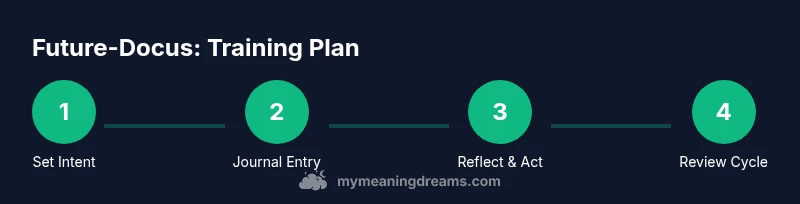
Day 1: Set a gentle nightly intention and write a brief wish about future exploration. Day 2: Create a 2-3 sentence dream script and place your journal beside the bed. Day 3: Record any recall and note emotions; Day 4: Review symbols and relate them to one upcoming decision. Day 5: Journal a vivid future scenario and outline two concrete steps. Day 6: Practice a 5-minute pre-sleep breathing routine. Day 7: Reflect on patterns and select one action to test in waking life.
Authority Sources
- What dreams can reveal about the future: https://www.apa.org/topics/dreams
- Dream research and public science: https://www.nimh.nih.gov/health/topics/dreams
- Sleep science and dream recall: https://www.sleepfoundation.org
Tools & Materials
- Dream journal (paper or digital)(A dedicated notebook or app for nightly notes)
- Pen or stylus(To jot quickly after waking)
- Quiet, comfortable sleep space(Minimize interruptions and distractions)
- Voice recorder (optional)(Useful for quick audio notes upon waking)
- Dream dictionary or guided glossary(Helpful reference for symbols (Meaning of My Dreams glossary))
Steps
Estimated time: 20-30 minutes per session
- 1
Set a gentle nightly intention
Before bed, form a calm, positive intention to explore future scenarios in your dreams. Keep language open-ended to invite curiosity rather than pressure. This primes your brain for meaningful recall without creating anxiety.
Tip: Use a single sentence and repeat it slowly before sleep. - 2
Establish a pre-sleep ritual
Create a short routine that signals bedtime, such as dimming lights, turning off screens, and stretching briefly. A consistent ritual stabilizes sleep onset and improves dream recall.
Tip: Limit caffeine and heavy meals in the 2–3 hours before bed. - 3
Record recall immediately after waking
Upon waking, stay still for a moment to preserve memory, then write down every fragment you remember. Even fragments matter and can trigger fuller recall later.
Tip: Use a voice recorder if you wake before you reach for a notebook. - 4
Describe future-oriented elements vividly
In your journal, emphasize places, people, and actions related to the future. Note emotions, senses, and any timelines or doors that appear.
Tip: Assign a color or sensory cue to key symbols. - 5
Identify recurring motifs
Look for symbols that repeat across nights—doors, journeys, clocks, horizons—and list potential meanings tied to your goals.
Tip: Create a small symbol map for quick reference. - 6
Link dreams to real-life goals
Transcribe at least one waking-life action inspired by a dream. Even a small adjustment can create momentum toward your future.
Tip: Choose actions that are specific and feasible within 1–2 weeks. - 7
Use prompts to generate depth
If dreams stall, use prompts like: What would this symbol mean for my next step? How would I respond in a future scenario?
Tip: Rotate prompts weekly to keep exploration fresh. - 8
Consider lucid-dreaming techniques
For deeper exploration, practice light lucid-dream cues that help you observe rather than control the dream narrative.
Tip: Begin with awareness cues during the day (naps, calm breath) to transfer to night dreams. - 9
Review and translate insights
Weekly, review journal entries and extract 1–2 concrete steps to test in waking life. Track progress and refine prompts.
Tip: Keep a running list of insights and progress notes.
FAQ
What does it mean to dream about the future?
Future dreams reflect your current concerns, goals, and imagination about what lies ahead. They symbolize possible paths and personal growth rather than literal destinies.
Future dreams reflect your goals and concerns, offering symbolic guidance rather than fixed predictions.
Can I train myself to have future-focused dreams?
Yes. With consistent journaling, pre-sleep intention, and reflective practice, you can increase the frequency and usefulness of future-oriented dreams.
Yes, with steady practice you can guide future dreams and improve insight.
Is lucid dreaming helpful for future-themed dreams?
Lucid dreaming can give you more control to explore future scenarios, but it requires cautious, gradual practice to avoid frustration or anxiety.
Lucid dreaming can help explore future ideas, but progress should be gradual.
How long does it take to see changes in dreaming?
Changes emerge with consistency; many people notice patterns over weeks as journaling becomes routine.
It often takes a few weeks of steady practice to notice patterns.
Should I share dream content about the future?
Sharing with a trusted person can provide perspective, but protect personal boundaries and avoid over-interpreting dreams.
Sharing can help, but keep boundaries and context in mind.
What if I forget my dream after waking?
Keep a journal by the bed and jot anything remembered immediately; even fragments help when reviewed later.
Keep a notebook ready to capture anything you remember, even if brief.
Watch Video
What to Remember
- Set a nightly intention to guide future dreams.
- Journal consistently to build reliable recall.
- Identify recurring symbols and connect them to goals.
- Translate insights into small, actionable steps.
- Review and adjust your practice weekly.