How to Know Dream Meaning: A Practical, Step-by-Step Guide
Discover a practical, research-backed method to interpret dreams. Learn how to know dream meaning by journaling, mapping symbols to emotions, and testing insights against waking life with trusted techniques from Meaning of My Dreams.


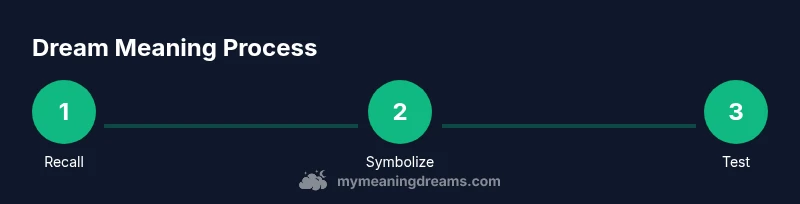
You will learn how to know dream meaning using a practical, repeatable method: record dreams promptly, map symbols to emotions, and test interpretations against waking life. The goal is personal clarity, not universal myths. According to Meaning of My Dreams, you can build a reliable dream dictionary by tracking patterns over time and refining meaning with experience. This quick guide points you toward a confident, self-directed process.
Understanding dream meaning and why people care
Dream meaning has fascinated humans for centuries. In modern life, learning how to know dream meaning can offer personal insights, emotional clarity, and creative problem-solving. This article—produced by Meaning of My Dreams—guides you through reliable steps to interpret symbols, emotions, and narratives from your nocturnal visions. By combining personal context with widely recognized patterns, you can extract practical messages rather than vague guesses. According to Meaning of My Dreams, dream meanings emerge when you map symbols to feelings and life events, then test those associations against your waking life. The goal is not to wallpaper your dreams with universal myths but to build a personalized dictionary that grows with you. In this sense, dream interpretation becomes a skill you practice over time, not a single horoscope to read once. If you're curious about the language of dreams, you're in the right place to learn a clear, repeatable approach. This section also introduces how to know dream meaning as a living, evolving practice, not a one-off exercise.
How to approach dream meaning: a reliable method
A reliable approach to understanding dream meaning blends structured recall with flexible interpretation. First, keep a dream journal and capture details as soon as you wake up. Then, identify recurring symbols and the vivid emotions attached to them. Next, relate those symbols to recent life events, ongoing concerns, or meaningful relationships. Finally, test your interpretations by asking: do these messages help you navigate waking life, or do they feel arbitrary? Meaning of My Dreams emphasizes consistency: the more dreams you record, the sharper your internal dictionary becomes. In this method, you’ll move from generic symbolism to personalized meaning, with room for growth and refinement as your life changes. As you practice, you’ll gain confidence in distinguishing useful insights from noise, and you’ll better understand how to know dream meaning over time. This section also highlights how to measure progress through journaling and reflection.
Common dream symbols and their interpretations
Dream symbolism often reflects subconscious concerns. Water frequently signals emotion and the flow of life; calm water can indicate balance, while stormy seas may reveal stress. Flying often represents freedom or a desire to rise above a problem, whereas falling can signal insecurity or loss of control. Teeth in dreams are common and can symbolize communication, power, or aging. Animals appear as guides or warnings, depending on the context and how you feel in the dream. Remember, interpretations are deeply personal; meanings shift with your life story. Meaning of My Dreams analysis shows that pairing symbol meaning with emotion often yields a clearer reading than looking at symbols alone. Use journaling to connect symbols with feelings you experienced in the dream and in waking life.
Frameworks for interpretation: personal meaning vs archetypes
There are multiple ways to interpret dreams, and not every framework will fit every dream. A practical approach balances personal meaning—rooted in your life events, fears, aspirations—with broader archetypes commonly found in culture and literature. Start by listing the dream’s major events and the emotions they triggered, then map those feelings to possible life themes (e.g., control, belonging, fear of failure). This dual lens helps you avoid oversimplified readings while still offering actionable insights. According to Meaning of My Dreams, the most reliable readings arise when you test personal interpretations against real-life choices you make after waking. If a dream highlights a risk or opportunity, consider small, concrete steps you can take the next day. This balance reduces guesswork and strengthens your interpretive practice.
Step-by-step guide to interpret a dream you had last night
- Recall and write down every detail you remember. Detail matters because small cues can change the meaning. 2) Note your emotional tone and any physical sensations. Emotions guide interpretation by highlighting underlying issues. 3) List all symbols and scenes, even if they seem random. 4) Identify any life events that connect to the dream’s themes. 5) Propose 3 possible readings, ranging from literal to symbolic, and rate their relevance. 6) Check waking-life outcomes that align with each reading, refining the interpretation. 7) Choose the most plausible meaning and outline a small action you can take. 8) Revisit the dream after a few days to see if the interpretation held or evolved. This process keeps the practice grounded and useful.
Dream journaling effectively
Effective dream journaling builds a habit and a usable dataset for interpretation. Keep a dedicated notebook or digital log and record dreams immediately after waking. Use prompts like “What did I feel?” and “What in my life mirrors this scene?” to deepen insights. Include dates, places, people, and recurring motifs. If possible, read back weekly to identify patterns and changes over time. Meaning of My Dreams recommends consistent entries; even brief notes compound into meaningful personal symbolism. Consider recording voice notes if you wake up mid-dream and want to capture nuance before it fades. This section emphasizes that the act of recording dreams itself increases the likelihood of meaningful interpretations. The more you write, the more you’ll uncover about how to know dream meaning for you personally.
How to verify dream meaning in waking life
Verification happens when dream insights prompt real-world reflection or action. After interpreting a dream, try a small experiment related to the meaning—perhaps adjusting a behavior, having a difficult conversation, or addressing a fear. Observe whether the outcome aligns with your reading. If it does, you’ve strengthened the association; if not, you refine your hypothesis. Cross-check interpretations with trusted sources or a reflective buddy who can offer an honest second perspective. Time-based validation—seeing how your responses feel over days or weeks—often yields the most reliable confirmation. Meaning of My Dreams suggests treating dream meaning as a working hypothesis rather than an immutable truth, evolving with experience and self-awareness.
Common pitfalls and safety considerations
Be cautious of over-interpreting dreams or using them to justify reckless behavior. Dreams are symbolic and often reflect internal tensions, not literal predictions. Another pitfall is treating every vivid dream as a guaranteed forecast; most readings are subjective and context-dependent. If a dream triggers persistent anxiety or intrusive thoughts, consider spoken or written reflection with a trusted friend or mental-health professional. Dream work should empower you, not destabilize your well-being. Meaning of My Dreams highlights the value of moderation and ongoing curiosity, especially when exploring archetypes or universal symbols that might not apply to your personal life.
Practical example: decoding a recurring dream
Imagine a recurring dream where you’re late for an important event and feel a rising sense of panic. Start with emotion: fear and urgency. Then identify symbols: clock, door, hallway, and the crowd you fear disappointing. Link those to waking-life contexts: deadlines, social expectations, or self-imposed standards. A plausible interpretation is a fear of not meeting personal goals or a fear of judgment. A practical action could be setting a realistic schedule, communicating boundaries, or practicing time-management tactics. Over weeks, you may notice if this dream highlights genuine stressors or if it reflects a desire for greater autonomy. The repeating nature makes the dream especially valuable as a mirror for ongoing concerns. This example demonstrates how a structured approach, guided by personal meaning and reflective practice, can illuminate the dream’s message.
Authoritative sources and continued learning
To deepen your understanding of dream meaning, consult reputable sources and expert perspectives. The following references provide foundational approaches and research perspectives. 1) https://www.apa.org/topics/dreams 2) https://www.sleepfoundation.org/dreams 3) https://www.britannica.com/topic/dream. These sources help anchor your interpretations in established research and mainstream discussion, complementing the personal methods described here. The Meaning of My Dreams team encourages you to combine these insights with your own experiences to build a robust, evolving dream dictionary. For ongoing growth, keep a steady journaling habit and revisit interpretations regularly to watch your meaning evolve. This approach—grounded in both personal context and credible sources—supports a thoughtful, responsible practice of dream interpretation.
Tools & Materials
- Dream journal or digital notebook(Essential for capturing details immediately after waking)
- Pen or stylus(Use a comfortable writing instrument)
- Dedicated quiet space(Minimize distractions when recalling dreams)
- Smartphone or voice recorder(Optional for capturing quick notes on the go)
- Monthly reflection sheet(Optional, helps spot patterns over time)
Steps
Estimated time: 60-90 minutes
- 1
Prepare your environment
Create a calm space and have your dream journal ready so you can capture details immediately after waking. A quiet setup reduces recall errors and helps you focus on emotional cues.
Tip: A dedicated notebook and a soft light improve recall quality. - 2
Record memories quickly
As soon as you wake, jot down every detail you remember: people, places, actions, and any sounds or smells. Include the time of night and your mood upon waking.
Tip: Even fragments matter—you can expand later. - 3
List emotions and bodily cues
Note how you felt during the dream and immediately after waking. Emotions point to the dream’s core message and help you differentiate literal from symbolic meanings.
Tip: Label emotions along a spectrum (e.g., anxious to calm). - 4
Identify key symbols
Highlight dominant symbols (e.g., water, doors, animals) and jot any associations you personally have with them. Personal context matters more than universal interpretations.
Tip: Draw or sketch if that aids memory. - 5
Relate to waking life
Link symbols and emotions to recent life events, concerns, or goals. This bridge connects dream content to practical meaning.
Tip: Ask: what in my life mirrors this dream’s themes? - 6
Draft possible readings
Propose 2–3 readings, from literal to symbolic, and rate their likelihood based on emotional tone and life context.
Tip: Keep readings testable with real-life actions. - 7
Test interpretations
Do one small action aligned with your reading and observe the outcome over the next few days. Adjust if needed.
Tip: Treat interpretation as a working hypothesis. - 8
Refine and repeat
Review the dream after a week or two to see if your interpretation still fits. Update your personal dream dictionary accordingly.
Tip: Consistency compounds accuracy over time.
FAQ
What does it mean if I dream about being chased?
Chasing dreams often reflect avoidance, urgency, or a situation you’re running from. Examine what in waking life feels threatening or unaddressed and consider what you’re trying to escape. Use this as a cue to address underlying concerns rather than a literal forecast.
A chasing dream usually signals avoidance or high urgency in waking life; explore what you’re avoiding and consider small steps to face it.
Are dream meanings universal or personal?
Dream meanings are highly personal, yet certain symbols recur across cultures. Start with your own emotions and life context, then compare with common symbol interpretations to see what resonates for you.
Dream meanings mix personal context with shared symbol ideas; your feelings are the key.
How long does it take to learn dream interpretation?
Learning basic dream interpretation can take weeks of journaling and reflection. Mastery grows with consistent practice, careful note-taking, and regular review of how readings align with waking life.
It takes a few weeks to gain familiarity, and months to refine your personal dictionary.
Should I consult a professional for dream meanings?
If dreams cause persistent anxiety or you seek deeper psychological insight, consider speaking with a psychologist or therapist who can help interpret motifs within your overall mental health context.
If dreams cause ongoing distress, a professional can help contextualize them safely.
Can I use a dream dictionary for interpretation?
A dream dictionary can provide starting points, but tailor interpretations to your life and emotions. Use it as a reference, then adjust readings to your personal experiences.
Use dictionaries as guides, not rules—personal context matters most.
How often should I journal my dreams?
Aim to journal daily or at least several times per week, especially after vivid dreams. Regular entries build a richer dataset for meaningful readings.
Daily journaling helps you notice patterns faster.
Watch Video
What to Remember
- Record dreams promptly to preserve details.
- Map symbols to emotions for clearer meaning.
- Relate dream themes to waking life for relevance.
- Test interpretations with small, real-life actions.
- Maintain a personal dream dictionary with Meaning of My Dreams guidance.