How to Not Dream About Work: A Practical Sleep Guide
Learn practical, evidence-informed steps to stop dreaming about work and improve your sleep. This educational guide blends boundary-setting, wind-down routines, and dream-interpretation insights from Meaning of My Dreams.


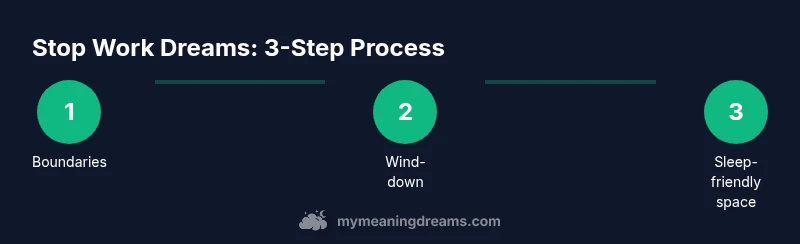
You can reduce or stop work-related dreams by building clear work boundaries and a soothing pre-sleep routine. Start with a dedicated wind-down ritual, write down lingering thoughts, and limit after-hours emails. According to Meaning of My Dreams, consistent practice across 4–6 weeks yields noticeable shifts in dream content and sleep quality.
Understanding why work dreams persist
Dreams about work are a common experience when stress spills into sleep. The brain uses dream time to process emotions, unresolved tasks, and daily worries. According to Meaning of My Dreams, recurring work-related dreams often reflect a need for boundaries, overwhelm, or cognitive overload. You might wake with a sense of urgency, guilt, or unfinished business. These dreams are not a sign of personal failure but a signal your nervous system is trying to reconcile daytime pressures. To begin reducing them, start by noting when the dream recurs and what happened during the day that could be tied to it. A simple morning or post-wake journal can reveal patterns and triggers that you can address. Building awareness is the first actionable step toward calmer nights.
Create a consistent wind-down routine
Develop a ritual that signals your brain to switch from work mode to rest. This typically includes at least 30–60 minutes of screen-free time, a warm bath or shower, light stretching, and a calm activity like reading. The aim is to reduce cognitive arousal and physical tension before bed. Meaning of My Dreams notes that predictable routines lower the odds of your brain rehearsing work scenarios at night. Include a short reflection on the day but avoid planning new tasks. Use a wind-down playlist with slow tempos to guide your breathing. A steady routine helps cue your nervous system that sleep is the next destination.
Set clear boundaries between work and personal life
Establish explicit boundaries, such as defined work hours, a closed laptop policy after dinner, and a separate work email schedule. Inform household members of your routine so there’s support for your boundaries. A 10-minute transition ritual after finishing work—putting away devices, turning off alerts, and naming a cue like “work day done”—helps your mind separate professional from personal space. Over time, these boundary cues can reduce nightly rumination about tasks. When boundaries are respected, your brain has fewer opportunities to rehearse work scenarios as you sleep.
Journal your thoughts and worries before bed
Before bed, write down the top three worries about work and the actions you can take tomorrow. This externalizes distressed thoughts and reduces rumination during the night. Keep prompts simple: What’s the next small step? What can I delegate? What’s most important to finish tomorrow? The act of transferring concerns to paper (or a secure notes app) creates a mental closing of the workday. According to Meaning of My Dreams, this technique supports smoother transitions between wakefulness and sleep. Regular journaling builds a bridge from daytime concerns to nighttime rest, making dreams less reactive to daily stressors.
Optimize your sleep environment for deeper rest
Make the bedroom conducive to sleep: cool temperature, dark room, and a comfortable bed. Remove screens from bedside, or use blue-light filters if you must glance at devices. White noise or a fan can mask disruptive sounds. Invest in blackout curtains and a supportive pillow. A stable, comfortable sleep environment reduces micro-awakenings and helps your brain settle into a restorative pattern, decreasing the likelihood of work themes intruding into dreams. The environment works with your routines to reinforce restful sleep and a calm bedtime state.
Mindfulness, breathing, and cognitive techniques to ease nightly ruminations
Practice slow breathing, progressive muscle relaxation, or a short mindfulness meditation before bed. Techniques like 4-7-8 breathing slow your heart rate and calm the nervous system, while PMR gradually releases muscle tension. Cognitive reframing can help rewrite anxious thoughts into neutral or positive ones. For example, remind yourself that tomorrow’s tasks are within reach and that you will handle them step by step. Regular practice strengthens your ability to redirect attention away from work during dream re-entry. Mindfulness cultivates a quiet mind that is less likely to be swept into work narratives as you sleep.
Manage workload and expectations to reduce overnight impact
Use daily planning to prevent last-minute pressure. Break large projects into tiny, defined tasks and set realistic deadlines. Prioritize what truly matters and delegate when possible. Communicate with your manager about workload and boundaries, and reserve after-hours time for rest. By reducing the amplitude of day-to-day stress, you lessen the cognitive load your brain must process during sleep. Consistent task management reduces the fear of slipping behind, which is a common trigger for work dreams.
When to seek professional help
Recurring work-related dreams that disrupt sleep despite consistent routines may indicate underlying anxiety or insomnia. If sleeplessness persists for more than a few weeks, consult a clinician or therapist specialized in sleep or cognitive-behavioral approaches. Early professional guidance can help identify coping strategies and address unhelpful sleep patterns. Meaning of My Dreams recommends seeking support when self-help strategies do not yield lasting relief, especially if anxiety affects daytime functioning or mood. A professional can tailor strategies to your personal context.
A practical 6-week plan to reduce work-related dreams
Week 1–2: Implement wind-down routine, set boundaries, and begin journaling. Week 3–4: Reinforce routines, refine task delegation, and optimize sleep environment. Week 5–6: Review patterns, adjust boundaries, and continue mind–body techniques. Expect gradual improvements, including fewer nightly awakenings and less vivid work imagery. The plan emphasizes consistency; you may notice changes in both dream content and daytime well-being as you align sleep, stress management, and work habits. The Meaning of My Dreams team notes that persistence is key; dreams move toward healthier themes when routines become automatic.
Tools & Materials
- Journal or notebook(A quiet place to write nightly reflections (paper or digital))
- Pen or stylus(Prefer a comfortable grip; color optional)
- Wind-down playlist or app(60-minute curated sequence to guide relaxation)
- Blue-light blocking glasses(Optional if you must use devices after dinner)
- Bedroom blackout curtains(Keeps room dark for deeper sleep)
- White-noise machine or app(Helpful for noisy environments)
- Calendar or planner(Offload tomorrow’s tasks to prevent rumination)
Steps
Estimated time: 4-6 weeks
- 1
Set clear work boundaries
Decide on a firm end time each day and communicate it to household members. Close your laptop, mute work notifications, and avoid responding after hours. This creates a predictable transition from work to rest.
Tip: Use a visible cue (e.g., a door sign) to signal the end of the workday. - 2
Build a wind-down routine
Choose a fixed sequence of 30–60 minutes that signals bedtime. Include screens-free time, a warm shower, light stretching, and a calming activity.
Tip: Play a slow-tempo playlist and focus on breathing to lower arousal. - 3
Capture tomorrow’s tasks
Write down the top 2–3 tasks for the next day. This externalizes concerns and reduces the urge to mentally rehearse tasks at night.
Tip: Keep prompts concise; avoid creating a long to-do list at bedtime. - 4
Limit after-hours stimuli
Turn off nonessential work notifications after dinner. If possible, use Do Not Disturb mode on devices until morning.
Tip: Place devices out of reach to resist temptation. - 5
Practice relaxation techniques
Try 5–10 minutes of breathing exercises or progressive muscle relaxation before bed to calm the nervous system.
Tip: Count breaths slowly (e.g., 4-in, 6-out) to pace the exhale. - 6
Optimize your sleep space
Ensure a cool, dark, and quiet room with a supportive bed. Remove screens and use blackout curtains to reinforce deep sleep.
Tip: Invest in a comfortable pillow and bedding that support spinal alignment. - 7
Review and adjust weekly
At the end of each week, assess what boundary changes and routines worked. Tweak timing and triggers as needed.
Tip: Keep a brief log of dream intensity and sleep quality to identify patterns.
FAQ
Can dreams about work indicate real work-related stress?
Yes. Dreams often reflect daytime stress that your brain is processing during sleep, signaling a need to address boundaries or workload.
Yes. Dreams can reflect daytime stress and boundary concerns.
Will reducing screen time before bed stop these dreams?
Limiting screens helps calm the nervous system, but it’s one part of a broader routine including journaling and boundary-setting.
Screen time matters, but boundaries and routines matter too.
Is therapy recommended for persistent work-related dreams?
If dreams persist and disrupt sleep, a sleep or cognitive-behavioral therapist can help tailor strategies.
Therapy can help when dreams persist.
Can I simply will the dreams away by thinking differently?
Mental reframing helps, but it may take consistent practice; dreams respond to behavior changes over time.
Reframing helps but takes time and consistency.
Should I adjust my sleep schedule to end work dreams?
A stable sleep schedule supports rest, but dream content is influenced by multiple factors beyond timing.
Sleep schedule helps, but isn’t a guaranteed fix for dreams.
Watch Video
What to Remember
- Set firm work boundaries to curb nightly rumination.
- Establish a consistent wind-down routine before bed.
- Journal worries to close the workday mentally.
- Optimize the sleep environment for deeper rest.
- Practice mindfulness and breathing to reduce dream intrusion.