Is Shifting or Lucid Dreaming Harder? A Side-by-Side Comparison
A rigorous, evidence-based comparison of shifting vs lucid dreaming. Learn practical techniques, training plans, and factors that influence which practice is harder for you, with insights from Meaning of My Dreams.


Is shifting or lucid dreaming harder? In practice, lucid dreaming generally requires sustained dream recall and ongoing self-awareness within the dream, while shifting emphasizes rapid entry into a vivid dream state. For many practitioners, shifting feels easier with specific cues and techniques, but lucid dreaming can be more demanding over time. Individual traits, practice routines, and consistency largely determine which is harder for you.
Understanding the core distinction between shifting and lucid dreaming
If you ask the question, "is shifting or lucid dreaming harder?", the quick take is that both practices demand different cognitive skills and training paths. Shifting typically prioritizes rapid entry methods and the ability to hold a dream experience with minimal disruption to waking life. Lucid dreaming, by contrast, centers on sustained awareness, deliberate control, and long-term dream recall. The Meaning of My Dreams team emphasizes that the difficulty is not absolute; it is highly personalized based on your sleep architecture, cognitive style, and daily routines. By framing the question around goals—speed versus depth—you can tailor a practice plan that minimizes frustration and maximizes progress. This nuanced view aligns with Meaning of My Dreams analysis, which highlights how personal factors shape perceived difficulty and success timelines.
The gap between intention and experience often lies in technique and consistency. Beginners may notice quicker wins with shifting, especially when employing simple reality checks and cue-based entry. However, the long arc of lucid dreaming tends to require deliberate practice: stabilizing awareness across longer dream segments, refining dream recall, and applying pre-bed rituals that reinforce conscious intent. As you experiment, track both entry success and dream quality to determine which path aligns with your daily life and sleep quality. This balance—between ease of entry and depth of dream engagement—helps explain why some readers report shifting as easier at first, while others report lucid dreaming becoming more reliable with time.
The insights below blend practical guidance with a research-informed lens to help you decide where to start, how to structure practice, and what realistic milestones look like over weeks or months.
Comparison
| Feature | Shifting | Lucid Dreaming |
|---|---|---|
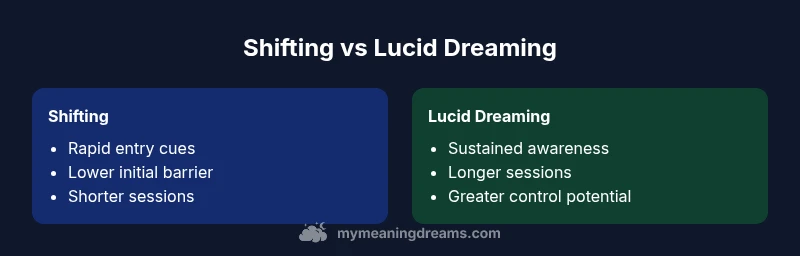
| Entry Method | Cue-based, rapid triggering, often shorter sessions | Sustained pre-sleep intention and in-dream awareness, longer sessions |
| Required Awareness | Low to moderate awareness of onset | High ongoing awareness during the dream |
| Training Time to First Success | Often faster for beginners | Can take longer to establish reliability |
| Common Techniques | Reality checks, anchors, trigger cues | Dream journals, Mnemonic Induction of Lucid Dreams (MILD), Wake-Back-to-Bed (WBTB) |
| Depth of Dream Control | Variable control, depending on cues | Greater potential for deliberate control and task-oriented dreams |
| Sleep Impact | Typically less intrusive on sleep in early practice | Requires consistent sleep window and may affect sleep quality if overused |
| Best For | Quick gains, steady entry into dream state | Long-term dream mastery, advanced dream manipulation |
Pros
- Lower initial barrier to entry for many learners
- Allows quick wins and frequent entry attempts
- Flexible practice that can fit into a busy schedule
- Can improve dream recall with minimal daily planning
- Accessible for beginners who want early confidence
Downsides
- Shifting can yield fragmented experiences if cues are misused
- Lower depth of dream engagement if not paired with recall work
- Less consistency in long-term dream control for some
- Techniques may become repetitive without progression
Lucid dreaming generally poses a higher initial hurdle but offers deeper dream mastery; shifting often provides quicker access with a lower entry barrier.
If your goal is rapid access to dream experiences, shifting is often the easier starting point. If you want sustained awareness and deliberate dream control, lucid dreaming becomes more demanding but ultimately more rewarding with practice.
FAQ
Is shifting easier than lucid dreaming for beginners?
In many cases, yes. Shifting can offer quicker entry into dream states using simple cues and techniques. Lucid dreaming often requires longer incubation and sustained awareness, which can be harder at the start but improves with consistent practice.
For beginners, shifting is commonly easier to pick up. Lucid dreaming becomes doable with steady routines like journaling and mnemonic methods.
What is the key technique to shift into a dream?
Most people start with a simple cue (like a hand or a word) and practice entry routines during naps or light sleep. Consistency and proper sleep timing help stabilize the cue-based transition into a vivid dream.
Start with one cue, practice regularly, and use it when you’re drifting into sleep to trigger a rapid dream onset.
How long does it typically take to lucid dream reliably?
Reliability varies, but many learners report several weeks to months of regular practice. Factors include sleep quality, technique consistency, and personal tendency toward dream recall.
Most people improve gradually; it’s common to need a few weeks to a few months of steady practice.
Can you practice both shifting and lucid dreaming at the same time?
Yes. You can alternate nights or mix techniques within a practice week. Staying mindful of sleep health is important to prevent fatigue.
You can train both, just be careful not to overload your sleep schedule.
What are common mistakes that hinder both practices?
Inconsistent practice, neglecting dream recall, and forcing techniques can all backfire. Start with small, repeatable steps and gradually scale up.
Avoid skipping routines. Build steady habits first.
Does sleep quality affect these practices?
Absolutely. Poor sleep reduces dream recall and wakefulness during dreams. Aim for consistent sleep windows and good sleep hygiene to support both practices.
Yes—good sleep makes it easier to enter and sustain dreams.
What to Remember
- Define your main goal before starting practice
- Expect quicker early gains with shifting, but longer-term depth with lucid dreaming
- Use a structured training plan that combines recall and awareness training
- Monitor sleep quality to prevent burnout and bias in progress
- Keep a flexible schedule to adapt techniques to your personal rhythm