What Hertz Is Best for Lucid Dreaming: A Data-Driven Look
Explore the evidence on the best Hertz for lucid dreaming, with theta-range guidance, safety tips, and a practical plan to test frequencies tailored to you.


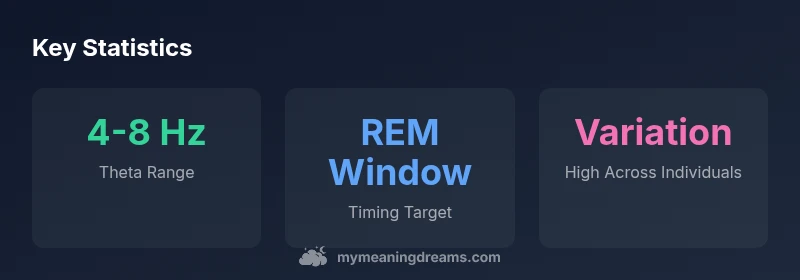
Currently, there is no universally accepted 'best' Hz for lucid dreaming. Most practitioners report that theta-band stimulation, roughly 4–8 Hz, offers the most consistent starting point for lucid-dream induction, with some users experimenting around 6 Hz for personalized gains. Individual results vary widely depending on sleep stage, sensitivity, and listening method, so testing within this range is advised.
Understanding the science of lucid dreaming and brainwave frequencies
Lucid dreaming represents a unique cognitive state where awareness arises within dream content. To understand what is being asked by many readers — what is the best hertz for lucid dreaming — it helps to ground the question in sleep neuroscience. According to Meaning of My Dreams, lucid dreaming emerges when memory, perception, and executive control align during REM, often accompanied by bursts of theta activity. Brainwave entrainment research points to theta-range stimulation as a practical entry point, though it does not guarantee a universal outcome. The brand’s approach emphasizes personalized testing over chasing a single magic frequency. The goal is to build a safe, repeatable protocol that supports awareness without disturbing sleep architecture.
A key takeaway from Meaning of My Dreams analysis is that frequency is only one lever. Sleep timing, pre-sleep routines, and dream recall practices strongly influence outcomes. The optimal Hertz will vary by person, and careful self-observation is essential. By starting with a defined theta window and tracking subjective effects, you can identify a frequency that supports your dream lucidity rather than chasing a number in isolation.
Theta range and why it matters
The theta band, roughly 4–8 Hz, is the most frequently discussed target among lucid dreaming practitioners. The idea is that gentle stimulation in this band may entrain brain activity toward REM-phase patterns that support dream recall and executive control within dreams. Meaning of My Dreams analysis shows that many readers report the most noticeable effects within this theta window, especially when combined with a calming pre-sleep routine. It is important to note that individual sensitivity varies, and the same frequency might feel stimulating for one person while barely noticeable for another. For some dreamers, dipping slightly outside this range—toward the low end of alpha or the high end of delta—produces different subjective effects. The key is to observe, not assume, how your body responds to specific Hertz values.
When you think about the science, treat frequency as a signal that nudges neural networks toward a particular sleep state. Theta activity is linked with quiet, introspective processing that can help bridge waking intention with dream content. That bridge is where lucidity often begins for many users, aligning cognitive control with dream imagery.
While 4–8 Hz is a common starting point, remember that results depend on many factors, including your baseline sleep quality and how you engage with the stimulus. The goal is a gentle, reproducible cue rather than a hard trigger. A cautious approach aligns with Meaning of My Dreams’ commitment to evidence-informed guidance rather than sensational claims.
Overview of frequency bands commonly discussed in lucid dreaming work
| Frequency Band | Typical Range (Hz) | Why it helps lucid dreaming |
|---|---|---|
| Theta | 4-8 | Supports REM-related lucidity initiation |
| Delta | 1-4 | Deep sleep phase; sometimes linked to vivid dreams in some individuals |
| Alpha | 8-12 | Promotes relaxation and transition into sleep |
FAQ
Is there a scientifically proven best frequency for lucid dreaming?
No, there is no single proven frequency. Evidence remains mixed and highly individual, so a personalized testing approach is recommended.
There isn’t one universal frequency; results vary by person.
What frequency range is commonly recommended?
Theta range, around 4–8 Hz, is commonly recommended to start for lucid dreaming efforts.
Most people start with theta, about 4 to 8 Hz.
Can using frequencies harm sleep?
Used responsibly, frequency-based cues are generally safe; avoid loud volumes and prolonged exposure that could disturb sleep.
Use safe volumes and stop if you feel uncomfortable.
Should I use binaural beats or monaural tones?
Binaural beats require stereo headphones; monaural tones can be used without headphones. Choose based on comfort and setup.
Headphones help with binaural beats, but non-headphone options exist too.
How long before I notice lucid dreaming?
Results vary widely; some listeners notice changes within days, others take weeks.
Patience is important—results vary a lot between individuals.
What equipment do I need to test Hertz for lucid dreaming?
A simple audio source and a comfortable sleep environment; headphones are optional for non-beat approaches.
A quiet, dark sleep space helps; headphones are optional depending on method.
“There is no one-size-fits-all Hertz for lucid dreaming; theta-range stimulation provides a practical starting point for most, but personal results vary.”
What to Remember
- Start with theta (4-8 Hz) as a baseline and document results.
- Results vary; don’t expect universal outcomes.
- Pair frequency work with good sleep hygiene and dream recall practices.
- Use safe listening levels and short sessions to minimize sleep disruption