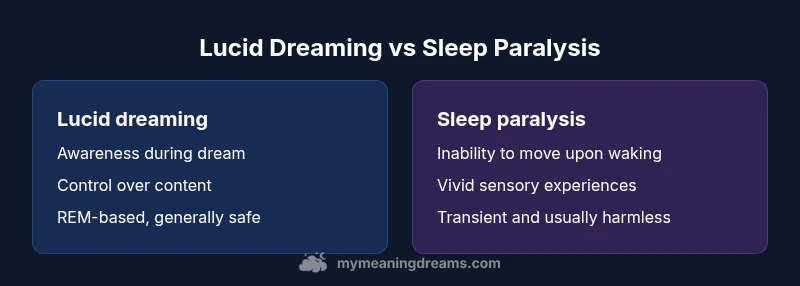
Lucid dreaming vs sleep paralysis: A clear comparison
An analytical, evidence-based comparison of lucid dreaming and sleep paralysis. Learn definitions, differences, safety tips, and practical guidance from Meaning of My Dreams.


Lucid dreaming and sleep paralysis are distinct REM-related experiences. In a lucid dream you’re aware and can steer events; sleep paralysis involves waking with your body temporarily immobile and vivid sensory input. This comparison breaks down definitions, differences, safety practices, and practical guidance for exploring these states with meaning and care.
What lucid dreaming vs sleep paralysis are: definitions and distinctions
In the study of lucid dreaming vs sleep paralysis, many readers want a clean distinction between the two experiences. In the context of dream interpretation and sleep science, lucid dreaming vs sleep paralysis describes one state where dream awareness and deliberate control are possible, and another where volitional movement is temporarily blocked after waking. In practical terms, lucid dreaming is an active, curiosity-driven experience; sleep paralysis is a transient, often unsettling state of motor immobility and surreal sensory input. Clarifying this difference helps readers use both experiences for personal insight while reducing fear about rare episodes. According to Meaning of My Dreams analysis, recognizing the boundary between awareness and motor constraint is essential for safe exploration of dream imagery, dream-work, and nocturnal cognition. The discussion also helps map how dream content, emotional tone, and memory formation interact with sleep cycles. Across cultures and ages, people report a spectrum of experiences, from vivid, colorful scenes to abstract, shifting symbols. The keyword lucid dreaming vs sleep paralysis anchors the discussion as we compare phenomenology, triggers, and coping strategies. This section sets the stage for practical exploration rather than sensationalism, emphasizing curiosity grounded in evidence and personal safety.
The science behind the states
Both lucid dreaming and sleep paralysis occur during REM sleep, a stage linked to rapid eye movements and vivid dreaming. Lucid dreaming often involves heightened metacognition, where dreamers recognize that they are dreaming and may exert some control over the dream narrative. Sleep paralysis, by contrast, results from REM atonia—the brain’s mechanism that prevents physical movement during dreams—persisting briefly after awakening. This dissociation between brain activity and body awareness creates a fragile boundary where dream-like sensations can intrude into wakefulness. Research in cognitive neuroscience and sleep science consistently shows that lucid dreaming can be cultivated through practice, reality checks, and dream journaling, while sleep paralysis is more tied to sleep fragmentation, irregular schedules, and anxiety. Meaning of My Dreams emphasizes that the quality of recall, emotional tone, and perceived safety shape how these experiences are remembered and interpreted. The science also points to individual differences: some people experience controlled dream content, others encounter intense sensory distortion or panic. Understanding these mechanisms helps demystify the experiences and reduces fear-based responses when episodes occur.
Phenomenology and common experiences
There is no single template for either lucid dreaming or sleep paralysis; experiences vary widely across individuals. In lucid dreams, many people report clear awareness within the dream, the ability to fly or perform feats, and a sense of agency that rivals waking life. Sensory details can feel extraordinarily vivid, and some dreamers can even rotate between different dream environments with minimal disruption. Sleep paralysis, on the other hand, frequently features a distinct sense of stillness followed by intense sensory input—visual or auditory hallucinations, an oppressive chest sensation, and a pervasive fear that something unseen is present. These experiences are not universal, but the recurring motifs—awareness without physical movement in one case, and waking immobility with dream-like intrusions in the other—help distinguish them. The meanings people derive from these experiences often depend on cultural context, personal history, and current mental state. For many, recognizing the boundaries between an active dream state and a paralytic one reduces distress and opens doors to reflective dream work. The distinction also informs how dream content is stored in memory and later interpreted.
Safety considerations and risk awareness
Both states are generally safe when approached with grounded, evidence-based practices, but awareness of safety is essential. Lucid dreaming can be a constructive tool for creativity, problem-solving, and self-exploration when undertaken with a balanced routine and realistic expectations. It is important to avoid pushing yourself into long, exhaustive sessions that disrupt sleep architecture. Sleep paralysis, while usually harmless, can be distressing and may be triggered by sleep deprivation, stress, or irregular sleep schedules. In such cases, calming grounding techniques—slow breathing, focusing on a fixed point, or purposeful orientation—can help reduce panic. If episodes become chronic, frequent, or significantly interfere with daytime functioning, seeking professional guidance is advised. Meaning of My Dreams recommends a cautious approach: prioritize regular sleep, maintain healthy circadian rhythms, and use these experiences to inform personal growth rather than chasing intensity. Documentation through a dream journal can also help separate episodic fear from lasting insights, reducing the risk of bias or false conclusions in interpretation.
Techniques to induce lucid dreaming vs managing sleep paralysis episodes
For lucid dreaming, practice is key. Start with reality checks (asking, “Am I dreaming?” and testing with a nose pinch or hand-reading a page) during the day to transfer the habit into dreams. Maintain a consistent sleep schedule, and use mnemonic induction (MILD) before bed to set the intention to recognize dream signs. Keep a dream journal to improve recall, which in turn supports lucid transition during REM. Visualization and planned dream scenarios—like flying or solving a puzzle—can reinforce desired outcomes within the dream. Managing sleep paralysis involves different priorities: ensure adequate sleep, limit caffeine and heavy meals close to bedtime, and reduce anxiety through breathing exercises and grounding techniques upon awakening. If you wake paralyzed, focus on small movements (toe wiggling, finger tapping) to regain motor control; maintain calm by describing the experience to yourself and reorienting to the surrounding room. In both cases, safety comes first: avoid stimulating or dangerous activities during a lucid episode, and never attempt to sleep in unsafe environments when experiencing paralysis.
Sleep hygiene and triggers: reducing disturbances
Effective sleep hygiene is foundational to both experiences. Establish a regular bedtime and wake time, limit exposure to screens an hour before bed, and create a restful sleep environment with a comfortable temperature and minimal noise. Be mindful of stimulants like caffeine and nicotine, particularly in the afternoon and evening, and consider winding down routines such as light stretching or meditation. Identify personal triggers—stress, travel, or shift work—and plan mitigation strategies, such as short naps during the day or adjusted meal timing. Adequate sleep duration reduces REM fragmentation, which is a common contributor to both lucid dreaming and sleep paralysis. Regular exercise, balanced meals, and hydration support stable sleep pressure and reduce nighttime awakenings. For some people, environmental factors such as bedroom lighting, noise, or even bedding can affect sleep continuity and the likelihood of REM-based experiences. By aligning daily habits with circadian rhythms, readers can cultivate healthier sleep architecture while also opening space for meaningful dream work.
Misconceptions and myths
Many myths surround lucid dreaming and sleep paralysis, ranging from sensational claims about supernatural powers to alarming warnings about imminent danger. A common misconception is that lucid dreams always require intense practice or special tech. In reality, natural variations in sleep cycles and individual cognitive styles play significant roles; for many, lucid dreaming emerges gradually with consistent habits rather than heavy ritual. Conversely, some people believe sleep paralysis signals a medical emergency or imminent psychosis; while alarming, most episodes are benign and transient. Another myth is that all dream content is meaningful or prophetic; while dream imagery can reflect daily concerns, it is not a direct forecast of real-world events. By grounding interpretations in personal context, memory patterns, and emotional tone, dream work becomes a reflective process rather than a search for universal messages. The Meaning of My Dreams approach emphasizes careful differentiation between myth and evidence, encouraging readers to document experiences and test interpretations over time.
Dream interpretation implications
Dream interpretation benefits from distinguishing the two phenomena because it shapes how you map nightly experiences to waking life. In lucid dreams, deliberate exploration can reveal preferences, fears, and creative impulses; the dreamer’s awareness allows experimentation with problem-solving and resilience-building. Sleep paralysis, with its sensory intensity, can illuminate unresolved anxieties or boundaries between wakefulness and sleep. Interpreting these episodes responsibly means separating sensation from meaning, noting emotional responses, and considering sleep hygiene changes that reduce recurrence. Meaning of My Dreams encourages readers to use a consistent framework: record, reflect, and compare dream motifs over weeks and months. This approach helps identify recurring symbols—like doors, stairs, or water—and understand how stress or recovery cycles influence dream content. With careful journaling and gradual technique development, readers can cultivate a nuanced dream practice that respects both curiosity and well-being.
Authority sources
For foundational information on lucid dreaming and sleep paralysis, consult credible sources and peer-reviewed research. These references provide context for the science and safety guidance discussed in this article. - NIH: National Institutes of Health (https://www.nih.gov) - NINDS: National Institute of Neurological Disorders and Stroke (https://www.ninds.nih.gov) - Nature: Nature.com (https://www.nature.com)
Comparison
| Feature | Lucid dreaming | Sleep paralysis |
|---|---|---|
| Awareness during experience | High awareness and potential control | Variable awareness; limited control; sense of threat or novelty |
| Control over events | Often able to steer dream content | Little to no control over dream content |
| Timing in sleep cycle | Typically during REM sleep | May occur during REM or upon waking from REM |
| Motor activity in body | Body usually immobile due to REM atonia; dream actions occur in the mind | Body remains temporarily immobile while waking; no voluntary movement |
| Recall quality | Often vivid and memorable; practice enhances clarity | Recall varies; may be distressing or hazy but memorable |
| Safety considerations | Safe when approached with grounding practices; risk is generally low | Potential for sudden fear; focus on calm, grounding strategies |
| Best for | Dream exploration, creativity, problem-solving | Stress relief, understanding night-time boundaries |
Pros
- Offers opportunities for insight, creativity, and problem-solving
- Can enhance dream recall and self-awareness
- Supports safe, guided exploration of dream content
- Accessible to many with regular practice
Downsides
- Can cause anxiety or panic during episodes
- Not everyone experiences lucid dreaming; progress varies
- Chronic sleep disruption if pursued aggressively
- Misinterpretation of dream content without context
Lucid dreaming generally provides more control and constructive potential for dream work, while sleep paralysis is transient and best managed with safety-focused strategies.
Choose lucid dreaming practices to explore dream content with intention and safety. Use grounding techniques and sleep hygiene to mitigate sleep paralysis. Both states offer insights when approached with curiosity and caution.
FAQ
What is lucid dreaming?
Lucid dreaming is a state in which the dreamer becomes aware that they are dreaming, and may gain some control over dream content and outcomes. It often results from trained metacognition and reflective practices during REM sleep. People use lucid dreaming for exploration, creativity, or problem-solving, while maintaining safe sleep habits.
Lucid dreaming is when you know you're dreaming and can steer the dream. With practice, you can guide what happens while you sleep.
What is sleep paralysis?
Sleep paralysis is a temporary inability to move or speak while transitioning between wakefulness and sleep. It often occurs during REM sleep when muscle atonia persists into wakefulness, sometimes accompanied by vivid sensory experiences. While distressing, it is generally harmless and can be mitigated with proper sleep hygiene.
Sleep paralysis is waking up and not being able to move for a short time, sometimes with vivid sensations. It’s scary but usually not dangerous.
Can lucid dreaming cause sleep paralysis?
Lucid dreaming and sleep paralysis are related to REM sleep but do not causally cause each other. Poor sleep quality or anxiety can increase the likelihood of both, yet with careful sleep practices, many people experience lucid dreaming without recurring paralysis.
Lucid dreaming and sleep paralysis aren’t the same; one doesn’t cause the other, but poor sleep can raise both chances.
How can I start lucid dreaming safely?
Begin with stable sleep routines, reality checks during the day, and dream journaling. Gradually introduce mnemonic induction techniques and targeted dream-sign awareness. Always prioritize sleep health and avoid pushing yourself into disruptive sleep patterns.
Start with steady sleep, test if you’re dreaming during the day, and write down your dreams to improve recall.
Is sleep paralysis dangerous?
Sleep paralysis is typically not dangerous. It can be frightening, but it does not cause physical harm. If episodes are frequent or severely distressing, consult a clinician to explore sleep patterns, anxiety levels, and management strategies.
Most episodes aren’t dangerous, though they can be startling. See a clinician if they happen often or cause lasting fear.
What’s the difference between a lucid dream and a dream with awareness?
A lucid dream explicitly involves conscious realization that you are dreaming and potential control. A dream with awareness may include noticing dream features without full control. Both are REM-based experiences and can be explored with similar dream-work techniques.
A lucid dream is when you know you’re dreaming and can steer it; a dream with awareness is similar but with less control.
What to Remember
- Learn the core definitions of lucid dreaming and sleep paralysis
- Prioritize safety and grounding during any episode
- Develop a dream journal to improve recall and insight
- Practice reality checks and gradual techniques for lucid dreaming
- Maintain regular sleep schedules to reduce disturbances