How to Use Sleep Paralysis to Lucid Dream: A Step-by-Step Guide
Learn a practical, safe approach to turning sleep paralysis into lucid dreams. This expert guide from Meaning of My Dreams covers preparation, entry, stabilization, and safety.


You can use sleep paralysis to trigger lucid dreams by following a deliberate, safety-first approach. This guide explains how to recognize the paralysis window, enter a calm state, perform technique steps (WILD-derived methods), and then stabilize lucidity. Written by Meaning of My Dreams, it emphasizes mental prep, sleep hygiene, and post-dream reflection.
The relationship between sleep paralysis and lucid dreaming
Sleep paralysis is a natural, temporary state that occurs as you transition between wakefulness and REM sleep. During this window, your body is paralyzed while your brain remains highly alert, creating a bridge to conscious dream control. For dream enthusiasts, understanding this overlap is the first step in leveraging the experience rather than fearing it. According to Meaning of My Dreams, many people can use this phase to enter lucid dreams with practice. The Meaning of My Dreams team found that consistency in routine matters more than dramatic overnight changes. In this guide, we map out how to use sleep paralysis to lucid dream safely and effectively. We cover preparation, entry, stabilization, and post-dream reflection. By the end, you’ll have a practical framework you can adapt to your own sleep pattern while staying mindful of safety and well-being.
Safety and readiness considerations
Deliberately exploring sleep paralysis and lucid dreaming can be a rewarding practice, but it carries potential risks if done without care. People with a history of trauma, anxiety disorders, or chronic sleep disruption should approach these techniques cautiously and preferably under guidance. The practice requires respecting your body’s boundaries and listening for signs of distress rather than pushing through fear. Always ensure you have time to recover after a session and avoid attempting complex entry if you are sleep-deprived or under the influence of substances. The Meaning of My Dreams team emphasizes conservative pacing: start with short sessions, gradually lengthen as comfort grows, and stop immediately if you feel overwhelmed. If you notice persistent sleep disturbance, consult a healthcare professional before continuing.
Key concepts and terms you should know
Before diving in, get clear on these terms: Sleep paralysis is the transient inability to move while transitioning between wakefulness and REM sleep. REM atonia is the normal muscle paralysis that prevents acting out dreams. Lucid dreaming is the ability to be aware you are dreaming and influence the dream. Wake-initiated lucid dreams (WILD) describe entering a lucid dream directly from waking state; dream-initiated lucid dreams (DILD) begin after dream onset. Understanding these ideas helps you set realistic expectations and choose a technique that fits your sleep pattern. The goal is not to force an experience but to create a reliable doorway to conscious dream control.
The step-by-step approach to entering a lucid dream from SP
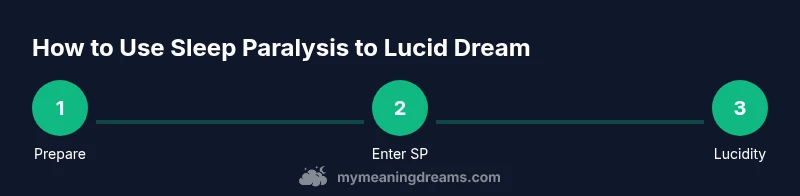
The core strategy blends awareness, calm, and consistent practice. Start by timing your practice around longer sleep periods to increase REM windows. Use a gentle anchor, such as slow breathing or a fixed visualization, to ride into paralysis without alarm. As you sense SP rising, shift attention to vivid, sensory imagery that will carry you into the dream world. Finally, once you’re lucid, use stabilization techniques to keep control and reduce arousal.
Practical preparation before bed
Establish a regular sleep schedule, create a dark and quiet sleep environment, and maintain a wind-down routine that relaxes the body and mind. Keep a dream journal by your bed so you can record symbols and cues immediately after waking. Practice light reality checks during the day (e.g., looking at your hands and asking, 'Am I dreaming?') to strengthen dream awareness. Consider a light snack if your last meal is hours away; avoid caffeine late in the day. The preparation phase is about building consistency so you can reliably experience the paralysis window.
Navigating the paralysis window with calm
The moment you feel the onset of sleep paralysis can be startling. Treat this as a boundary rather than a trap. Focus on slow nasal breathing, jaw and shoulder relaxation, and a soft mental soundtrack (e.g., a repeating phrase like 'calm and lucid'). If you hear voices or feel movements, gently reframe them as dream signals rather than threats. The goal is to hold still, maintain awareness, and prevent wakeful panic.
Techniques for entering and stabilizing a lucid dream from SP
Several practical techniques increase your odds: visualize entering a familiar dream scene, engage in sensory grounding (rub your hands, feel textures, listen for ambient sounds), and maintain a steady breathing rhythm to sustain the transition. Gentle spinning or shifting perspective helps you anchor the dream without waking. Use a simple mantra like 'I am lucid' to reinforce awareness, then focus on vivid sensory details to stabilize the dream image.
Common challenges and how to handle them
Expect moments of fear, brief awakenings, or fading dream imagery. If panic arises, switch to slow breathing and remind yourself that you are safe and in a dream. Keep a flexible plan and avoid forcing outcomes. If recall is poor, jot key symbols in your dream journal and return to the practice regularly to improve memory.
Nightly plan and long-term practice
Aim for consistent nightly practice rather than sporadic, long sessions. Schedule a wind-down routine, ensure a dark, quiet room, and commit to a 4–6 week training window to build skill. Track progress with a simple log: date, duration, cue used, outcome, and dream recall quality. Over time, you’ll notice more consistent entry into lucid dreams from these paralysis windows.
The role of journaling and aftercare
After each session, record dream details, cues, and any emotional responses. Review patterns over weeks to refine your technique and reduce anxiety surrounding SP. If you experience lingering sleep disturbance, scale back and reassess pacing. Meaning of My Dreams recommends treating this as a gradual skill instead of a one-time experiment.
Final checklist before you start
- Confirm you have 60–90 minutes available for a focused session.
- Prepare a quiet, dark space and a comfortable sleep environment.
- Keep a dream journal and reality-check habit established.
- Learn to recognize SP onset without panic and use grounding techniques.
- Establish a plan for the next few weeks and adjust based on your experience.
AUTHORITY SOURCES
- Sleep Foundation. https://www.sleepfoundation.org/
- National Institute of Neurological Disorders and Stroke (NINDS). https://www.ninds.nih.gov/Disorders/All-Disorders/Sleep-Disorders-Information-Page
- National Institutes of Health (NIH). https://www.nih.gov/
Tools & Materials
- Dream journal(Keep by bed; jot dreams as soon as you wake.)
- Comfortable bedding and sleepwear(Promotes a comfortable, uninterrupted sleep.)
- Gentle alarm or wake timer(Set to trigger during the later sleep cycle.)
- Quiet, dark sleep environment(Minimize disruptions during the night.)
- Breathing timer or mindfulness app(Helps maintain calm during entry.)
Steps
Estimated time: 60-90 minutes per attempt; ongoing practice over several weeks
- 1
Set intention and prepare environment
Create a calm, safe space and clearly state your intention to enter a lucid dream from sleep paralysis. Align your environment to minimize interruptions and set a realistic goal for the session. This foundation keeps you from panicking when SP begins.
Tip: Repeat a simple affirmation aloud before sleep: 'I stay calm and lucid'. - 2
Choose a wake-time anchor
Decide on a gentle cue to latch onto during the transition, such as slow breathing or a fixed visualization. This anchor helps you ride the boundary between wakefulness and sleep without waking.
Tip: Practice the anchor during the day to strengthen its reliability at night. - 3
Enter paralysis with calm breathing
As paralysis begins, switch attention to your breath, keeping it slow and steady. Avoid tensing muscles; instead, surrender to the sensation and maintain awareness.
Tip: If panic rises, widen your focus to the sensory environment and label sensations as temporary dream cues. - 4
Transition into lucidity with imagery
Once you feel the boundary, start vivid visual and sensory imagery aligned with a familiar dream scene. The aim is to produce a stable, clear dream picture rather than a jarring shift.
Tip: Focus on textures, colors, and ambient sounds to deepen the dream scene. - 5
Stabilize the lucid dream
Engage sensory grounding (rub palms, feel textures) and repeat a short cue like 'I am lucid' to maintain awareness. Move slowly within the dream to prevent arousal that could wake you.
Tip: If you feel the dream fading, slow your breathing and re-anchor with a tactile cue. - 6
Exit plan and dream journaling
Have a deliberate exit strategy (gently rotate your body or become aware of the room) and record the experience upon waking. This helps reinforce memory and improves future sessions.
Tip: Note emotional tone and any symbols for your ongoing dream dictionary.
FAQ
Is it safe to intentionally induce sleep paralysis for lucid dreaming?
With proper preparation and a calm mindset, many people can explore lucid dreaming through sleep paralysis. However, it is not risk-free for everyone, especially those with a history of trauma or sleep disorders.
It can be explored safely with careful preparation, but consult a clinician if you have concerns.
How long does it typically take to enter a lucid dream from sleep paralysis?
Timing varies by individual and sleep schedule. Most practitioners report gradual improvement over weeks with consistent practice and suitable REM windows.
Progress comes with consistent practice and proper sleep routines.
Do I need special equipment to attempt this technique?
No specialized gear is required beyond a quiet sleep space, a dream journal, and a willingness to practice nightly or several times per week.
A calm space, a journal, and patience are enough to begin.
Can sleep paralysis experiences be distressing or trigger anxiety?
Yes, SP can be distressing for some people. Use slow breathing, grounding, and safe boundaries. Stop if dizziness or panic worsens and seek guidance if needed.
If it feels overwhelming, pause and reassess with care.
What should I do if I wake up during a session and can't fall back asleep?
Stay calm, practice a brief breathing exercise, and consider journaling before trying again. A short nap later in the day can help rebalance sleep.
Pause, breathe, and try again after a restorative rest.
Will sleep paralysis always lead to a lucid dream?
No, it’s not guaranteed. Lucidity develops with practice, patience, and choosing techniques that suit your sleep pattern.
Not guaranteed, but your odds improve with regular practice.
How should I handle intrusive thoughts during SP?
Acknowledge thoughts without judgment, reframe them as signals that you’re dreaming, and return to breathing and grounding.
Acknowledge and gently guide your focus back to the dream.
Watch Video
What to Remember
- Prepare your environment and mindset for safe practice
- Use calm entry techniques to reduce panic during SP
- Stabilize lucidity with sensory grounding and a simple mantra
- Journal after each session to build a personal dream dictionary
- Progress gradually across weeks, not days