How to Lucid Dream Without a Dream Journal: A Practical Guide
Discover how to lucid dream without keeping a dream journal. This educational, step-by-step guide covers reality checks, sleep hygiene, mnemonic techniques, and practical routines to help you reach lucidity without diary-keeping.


You can lucid dream without a dream journal by combining reality checks, intention-setting, and a consistent sleep routine. Focus on simple mental cues, daily mindfulness, and a wake-back-to-bed rhythm to trigger lucidity. This approach emphasizes practical habits over note-taking while still guiding your awareness toward dreams.
Core concept: lucid dreaming without a dream journal
If you’re wondering how to lucid dream without a dream journal, you can still cultivate lucidity through consistent sleep schedules, practical reality checks, and deliberate mental rehearsal. Journaling can deepen dream recall, but it isn’t a prerequisite for entering lucid states. The core idea is to train your waking awareness so it prompts recognition when you dream. According to Meaning of My Dreams, reliable insights come from clear routines and mindful practice, not only from recording experiences. This section outlines a flexible path that emphasizes accessible habits you can start tonight.
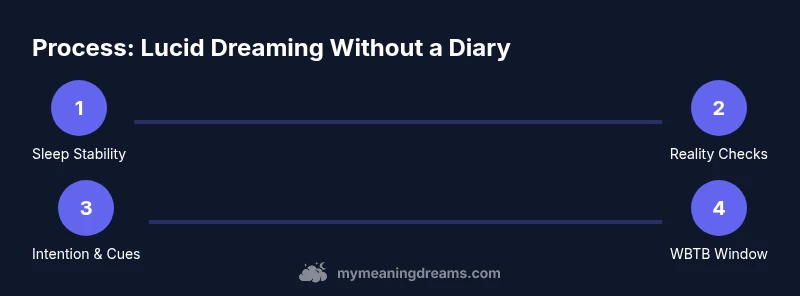
Sleep hygiene and consistency as foundation
A stable sleep pattern is the backbone of lucid dreaming without a journal. Go to bed and wake up at the same times daily, including weekends, to stabilize your circadian rhythm. Create a wind-down ritual—dim lights, gentle reading, and calm breathing—that signals to your body that it is time to transition into dream sleep. Avoid heavy meals, caffeine late in the day, and screen exposure for at least an hour before bed. When your sleep architecture is reliable, you’ll experience more predictable REM periods, increasing opportunities for lucid experiences. Meaning of My Dreams notes that consistent sleep quality often correlates with more vivid dreams and easier lucidity, even without a diary.
Reality checks that work without journaling
Reality checks are practical tools for recognizing lucidity in dreams. Try these quick checks during the day to build a habit in your subconscious: (1) Pinch your nose and see if you can breathe through it; (2) Push your palms together and observe if they merge in odd ways; (3) Look at a digital clock or text, glance away, then look back to notice if tiny, dreamlike distortions occur. Conduct 5–7 checks across a day, spaced out enough to form a pattern. In dreams, these checks often fail, reminding you that you are dreaming. The key is consistency rather than perfection; repeated checks cue your brain to question reality when dreaming, even without journaling afterwards.
Mnemonic techniques and mental rehearsal without writing
Mnemonic strategies don’t require a notebook to be effective. Use a concise intention before sleep: “Tonight, I realize I am dreaming.” Pair it with a brief mental rehearsal during the day—visualize yourself performing a lucid action in a dream (like flying or exploring). This approach is a light version of the MILD technique adapted for journal-free practice. Repetition builds confidence, and a short, firm intention can carry through into the dream state. The goal is to insert a clear cue into your memory that triggers lucidity without relying on written notes.
External cues and environment anchors
External cues can support lucid dreaming while keeping journaling out of the picture. Place a subtle cue near your bed—an object you consistently see at night—or use a low-volume audio cue (such as a chime) that you associate with awareness. The cue should be present consistently in your pre-sleep environment but not so intrusive that it disrupts sleep. When the cue appears in a dream, it can tip you into lucidity. This strategy links your waking life with dream life through simple, repeatable associations rather than diary-driven memory work.
Wake-back-to-bed and dream incubation without a diary
The wake-back-to-bed (WBTB) method can be adapted without journaling. Set a gentle alarm to wake after 4–6 hours of sleep, stay awake for 15–30 minutes, then return to bed with a strong intention to recognize you are dreaming. During the awake period, engage in light, non-stimulating activities and repeat your intention phrase. The goal is to increase REM density during the subsequent sleep cycle, boosting the chances of lucid dreams. While journaling isn’t required, you can silently rehearse your intention during the wake period to reinforce the cue.
Dream recall without writing: how to remember more without a diary
You can improve dream recall without a journal by focusing on mental rehearsal and gentle reflection. Immediately after waking, lie still for 1–2 minutes and mentally narrate the dream in your head, or speak a quick, one-sentence summary into a voice memo app without committing to a written log. Keeping a calm, non-judgmental attitude about recall helps you capture more details over time. The emphasis is on forming an accessible mental habit rather than maintaining a written record.
Creating a simple nightly routine you can rely on
A practical nightly routine—short, repeatable, and diary-free—often yields the best results. Example sequence: (1) 60 seconds of box breathing, (2) 2 minutes of gentle visualization of becoming lucid, (3) 5 minutes of relaxing posture and progressive muscle relaxation, (4) final intention cue spoken softly before sleep. Maintain consistency, adjust the routine only gradually, and avoid strenuous activities or stimulating content before bed. This steady pattern improves both sleep quality and the likelihood of lucid experiences.
Authority sources and further reading
For readers who want deeper context, consult reputable sources on lucid dreaming and sleep science. The Sleep Foundation provides accessible overviews of lucid dreaming concepts and practical tips. The National Institute of Neurological Disorders and Stroke offers general information on sleep-related phenomena, while Psychology Today presents approachable explanations of lucid dreaming techniques. These sources complement the diary-free approach with evidence-based background and broader context.
Tools & Materials
- Stable sleep schedule planner(Set consistent bed and wake times; track changes)
- Quiet, comfortable sleep environment(Dark, cool, and noise-controlled if possible)
- Reliably set alarm/timer(For wake-back-to-bed practice and reminders)
- Optional cue aids (non-intrusive)(Calm ambient sounds or a small object near bed)
- Breathing/relaxation aid(A simple guided breath app or timer)
Steps
Estimated time: 4-8 weeks
- 1
Set a stable sleep schedule
Choose a consistent bedtime and wake time that works for you, aiming for 7–9 hours of sleep. This creates reliable REM windows, increasing opportunities for lucid dreams without journaling. Maintain the schedule across weekdays and weekends to stabilize your circadian rhythm.
Tip: Use a fixed wind-down routine to signal sleep onset. - 2
Incorporate 5–7 daily reality checks
Perform simple checks like nose pinching and palm pressure at regular intervals during the day to create a habit that transfers into dreams. The goal is to develop a strong, automatic cue for questioning reality once you fall asleep.
Tip: Pair checks with a brief reminder phrase to reinforce memory. - 3
Set a pre-sleep intention
Before bed, clearly state your intention to realize you are dreaming. Do this silently or aloud in a calm tone. Repeating the intention primes your cognitive system for lucidity without requiring a written plan.
Tip: Keep the phrase short and specific: 'Tonight I realize I am dreaming.' - 4
Practice light mental rehearsal
During the day, visualize gentle dream scenarios where you become lucid. See yourself recognizing a dream sign and engaging in a simple, controllable action. This mental practice supports wakefulness in dream states without journaling.
Tip: Use a calm, non-stimulating visualization; avoid intense emotions. - 5
Leverage external cues
Place non-disruptive cues in your environment (e.g., a soft chime or a familiar object) that you associate with awareness. When you encounter the cue in a dream, you may become lucid. Keep cues consistent and non-intrusive.
Tip: Test cues on non-sleep days to ensure they don’t disturb rest. - 6
Try wake-back-to-bed (WBTB) gently
Wake after 4–6 hours of sleep, stay awake 15–30 minutes, then return to bed with a clear intention to notice you’re dreaming. The awake window should be calm; avoid heavy activity. This increases REM onset opportunity for lucid dreams.
Tip: Keep the wake period light—no screens or intense activity. - 7
Cultivate day-time mindfulness
Practice short mindfulness moments during the day: brief body scans, breathing checks, and nonjudgmental awareness. A calmer, more attentive mind supports lucid dream recognition when you’re asleep.
Tip: Even 2–3 minutes of mindful breathing helps. - 8
Recall without a diary
If you wake with a fragment, replay the memory mentally and narrate it in your head or record a quick voice note. Do not force journaling; instead, capture meaningful details in a short, informal way that suits you.
Tip: The goal is to strengthen memory traces, not to produce a perfect log. - 9
Review and adjust your routine
After a 2–3 week period, assess what is working. If lucidity is rare, slightly tweak the pre-sleep intention, cue placement, or WBTB timing. Small, consistent tweaks yield better long-term results than dramatic changes.
Tip: Document what you change and observe outcomes in your memory rather than a diary.
FAQ
Do you really need a dream journal to lucid dream?
No. You can develop lucid dreaming skills through sleep hygiene, reality checks, and mental rehearsal without keeping a dream journal. Journaling can enhance recall for some, but it isn’t required for lucidity.
No—lucidity can be cultivated with routine, checks, and intention, even if you don’t keep a dream journal.
How long does it take to start lucid dreaming without journaling?
Results vary by person, but many find noticeable differences within several weeks of consistent practice. Focus on steady habits rather than rapid outcomes.
Results vary, but with steady practice you may notice lucidity within a few weeks.
Can external cues reliably trigger lucidity without a diary?
External cues can support recognition in dreams when used reliably, but they work best when paired with consistent sleep and reality checks. Expect gradual improvements rather than instant results.
Yes, with consistent use, cues can help trigger lucidity over time.
What should I do if I wake frequently during the night?
If waking interrupts quality sleep, adjust your bedtime routine to reduce arousal—keep the WBTB window short and gentle, and prioritize overall sleep health.
Tweak your routine to protect sleep quality and try shorter wake periods.
Is it safe to attempt lucidity methods if I have sleep concerns?
If you have chronic sleep issues or conditions like sleep apnea, consult a clinician before attempting intense lucid-dreaming routines.
Consult a clinician if you have sleep disorders before trying these methods.
How do I maintain motivation without a diary?
Rely on qualitative feelings of progress—more vivid dreams, more awareness in dreams, and smoother relaxation—not just written records.
Notice your growing ease with awareness and dream vividness as signs of progress.
Watch Video
What to Remember
- Build a stable sleep pattern first.
- Practice short reality checks daily.
- Set a concise pre-sleep intention.
- Use external cues to trigger lucidity.
- Recall dreams mentally without writing them down.