Vivid Dreams vs Normal Dreams: Meanings & Differences
Explore how vivid dreams differ from ordinary dreams, what their imagery and emotions reveal about memory and stress, and a practical framework to interpret dream content with Meaning of My Dreams.


Vivid dreams are the most intense, emotionally charged dreams that often linger after waking, while normal dreams tend to be calmer and shorter. The difference typically reflects sleep stage, emotional state, and memory processing. This comparison guide from Meaning of My Dreams provides a practical framework to interpret vivid dream content, identify underlying themes, and connect them to waking life.
Understanding vivid dreams vs normal dreams
According to Meaning of My Dreams, vivid dreams are defined by sensory richness, heightened emotions, and lasting recall upon waking. They often feel like a cinematic experience, complete with vivid color, crisp sounds, and a sense of immediacy. Normal dreams, by contrast, tend to be softer in imagery, less intense in emotion, and more fragmented or fleeting when you wake. The distinction is not a rigid binary; rather, it reflects variations in dream intensity, cognitive processing, and waking-life context. Recognizing this spectrum helps dream enthusiasts interpret dream content with greater nuance, avoiding over-interpretation of every vivid moment while still valuing valuable symbolic cues.
This section lays the groundwork for a measurement-informed approach to dream interpretation, one that respects individual variance and cultural context. The key is to observe how dream vividness correlates with your stress levels, recent experiences, and emotional states. By doing so, you can begin to separate memory-driven recall from symbolic meaning and identify which elements consistently reappear across different nights.
In practical terms, the goal is to map dream imagery to waking life concerns without assuming a one-size-fits-all interpretation. For readers of Meaning of My Dreams, the process starts with honest reflection, careful journaling, and a willingness to explore multiple possible meanings rather than a single definitive reading.
Comparison
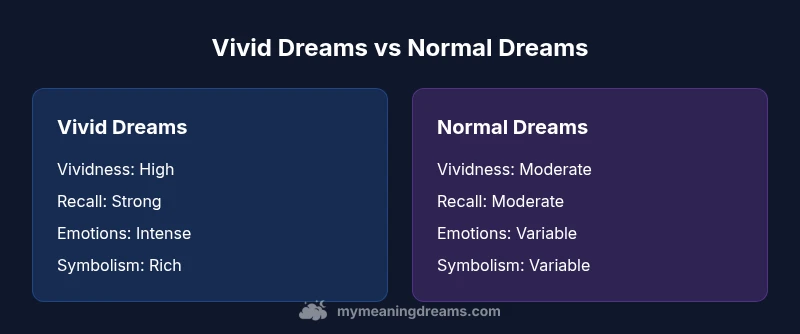
| Feature | Vivid Dreams | Normal Dreams |
|---|---|---|
| Vividness/Imagery | high | moderate |
| Recall/Memory | strong | moderate |
| Emotional Intensity | very high | low-to-moderate |
| Symbol Richness | often rich | varies |
| REM Sleep Involvement | primarily REM | variable |
| Frequency | frequent | less frequent |
| Impact on Mood Next Day | potentially powerful | mild influence |
| Interpretation Difficulty | highly interpretive | less demanding |
Pros
- Helps uncover emotional processing signals
- Encourages reflective journaling and self-awareness
- Rich dream imagery can reveal personal symbolism
- May indicate sleep quality or stress levels
- Stimulates curiosity about waking-life patterns
Downsides
- Interpretations can be speculative without corroborating life context
- Not a diagnostic tool for medical conditions
- Overemphasis on vividness may overlook meaningful but subtle dreams
- Distressing vivid dreams can cause sleep disruption
Vivid dreams offer deeper emotional insights but require careful, contextual interpretation
Choose to examine vivid dream content for emotional signals and symbolic patterns. Use structured journaling and compare across nights to build a reliable interpretation, rather than over-reading single episodes.
FAQ
What exactly distinguishes vivid dreams from ordinary dreams?
Vivid dreams feature intense sensory detail and strong emotions, making them memorable after waking. Ordinary dreams are generally softer, less memorable, and more fragmented. Both can contain meaningful symbols, but vivid dreams often require more careful contextual interpretation.
Vivid dreams feel more intense; ordinary dreams are milder and easier to forget.
Can vivid dreams occur in non-REM sleep?
Most vivid dreams happen during REM sleep, when brain activity resembles waking patterns. Intense dream-like experiences can occasionally occur in non-REM stages, though they tend to be less vivid. Dream journaling helps you notice when vivid content appears across sleep stages.
They’re usually REM-based, but you might notice vivid moments elsewhere.
Do vivid dreams indicate stress or trauma?
Vivid dreams can reflect emotional processing related to stress or unresolved concerns. They are not diagnostic indicators by themselves, but frequent distressing vivid dreams may warrant attention to sleep quality and emotional well-being.
They can signal how you’re processing emotions, not a medical diagnosis.
How can I remember vivid dreams better?
Keep a dream journal by your bed and jot notes immediately after waking. Review entries daily to identify recurring images and themes. Maintain regular sleep schedules and limit stimulants before bed to improve recall.
Write dreams down as soon as you wake up.
Are vivid dreams a sign of sleep disorders?
Often not, but very vivid or distressing dreams can accompany sleep deprivation, anxiety, or REM sleep disorders in rare cases. If dreams disrupt sleep or cause persistent distress, consult a clinician.
Sometimes they relate to sleep health; seek advice if disruption occurs.
Would lucid dreaming help manage vivid dreams?
Lucid dreaming can offer control during vivid dreams and reduce distress for some people. It requires practice, healthy sleep habits, and a calm waking-life routine to be effective.
Lucid dreaming can help, with proper practice and sleep health.
What to Remember
- Identify dream vividness and emotional tone upon waking
- Keep a consistent dream journal to spot patterns
- Differentiate REM-driven imagery from waking-life stress
- Treat symbols as personal, culturally informed cues
- Approach interpretation with balanced skepticism and curiosity