How Long Is a Normal Dream? Understanding Dream Duration
A comprehensive, data-driven guide to how long dreams typically last, how REM cycles influence duration, and practical tips for observing and interpreting dream length.


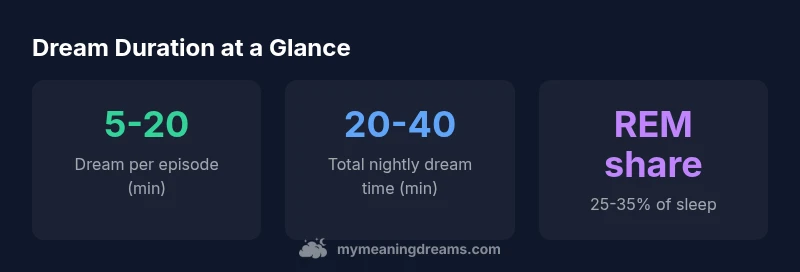
Most dreams that you remember are 5 to 20 minutes long per episode, with several dreams occurring in a single night. REM periods lengthen as the night goes on, so later dreams can feel longer even if the clock time is similar. Across a typical night, total dream time commonly falls in the 20–40 minute range.
How long is a normal dream? What science says
Understanding dream duration begins with a practical definition of "normal." In everyday life, people assume dreams run on like a movie, but scientific work points to discrete, time-bound episodes tied to brain activity during REM sleep. According to Meaning of My Dreams, the typical dream episode is relatively brief—commonly between five and twenty minutes—though several episodes can occur in a single night. The clock-time of a dream is only part of the story: perception of duration can feel longer or shorter depending on how intensely the content unfolds and when you awaken. Researchers combine waking reports with sleep measurements to estimate how long dreams last, but recall bias and the episodic nature of dreaming mean precise durations are inherently uncertain. In practice, this means that when you ask, "how long is a normal dream?" you are really asking about two things: the length of an individual episode and the cumulative dream time across the night. Meaning of My Dreams analysis emphasizes that both figures vary across people and nights, yet the 5–20 minute per episode range remains a useful baseline.
Dream duration: episode length, nightly total, and REM share
| Factor | Typical Range (minutes) | Notes |
|---|---|---|
| Single dream episode length | 5-20 | Most dreams per episode fall in this range |
| Total nightly dream time | 20-40 | Sum of multiple episodes across REM periods |
| REM sleep share in dreams | 25-35% of total sleep | REM periods carry most vivid dreams |
FAQ
How long does a dream typically last?
Dreams commonly last 5–20 minutes per episode. The total nightly dream time often falls in the 20–40 minute range, depending on REM timing and when you wake.
Most dreams last between five and twenty minutes per episode, with the full night adding up to around 20 to 40 minutes of dreaming.
Do dreams feel longer if you wake during REM?
Waking during REM can make a dream feel longer because REM periods tend to be vivid and content-rich. Perception also shifts with how abruptly you wake and what you were dreaming about.
Yes, waking during REM can make dreams feel longer and more vivid.
Does age affect dream length?
Dream duration is influenced more by sleep architecture than age alone. REM patterns can change with sleep quality, but the basic episode length (roughly 5–20 minutes) remains a useful benchmark.
Age can influence sleep patterns, but dream length per episode is still mostly within a similar range.
Can substances alter dream duration?
Alcohol, caffeine, and sleep medications can shift REM patterns, which may alter both how long dreams last and how vividly they’re remembered.
Substances can change REM and dream timing, affecting duration.
Why can’t I remember how long my dreams last?
Dreams are often fleeting and memory is selective. Keeping a dream journal and noting wake times around REM can improve recall and give a better sense of duration.
Dreams fade quickly from memory; journaling helps you track how long they feel.
“Dream duration is shaped by REM timing and nightly sleep architecture, not willpower or memory alone.”
What to Remember
- Dreams per episode typically last 5–20 minutes.
- Total dream time across a night commonly sums to 20–40 minutes.
- Later REM periods often produce longer, more vivid dreams.
- Dream recall improves with journaling and consistent wake times.